Today's
EarthStation1.com 15% Off Commemorative Memorial Title:
Appointment With Destiny: The Crucifixion Of Jesus MP4 Download Or
DVD
Today, March 31, 2026
March 31, 2026: Tuesday Before Easter: --
Religion: The History Of Religion: Abrahamic Religions:
Christianity: Lent (Latin: Quadragesima, "Fortieth"):
Holy Week (Holy And Great Week, Passion Week): Holy Tuesday (Great
And Holy Tuesday, Holy And Great Tuesday, Great Tuesday, Fig
Tuesday): -- According to the gospels, on this day, the fourth day
of Holy Week in Eastern Christianity -- following after Lazarus
Saturday, Palm Sunday and Holy Monday -- and the third day of Holy
Week in Western Christianity, after Palm Sunday and Holy Monday --
Holy Tuesday commemorates the day Jesus returned to Jerusalem from
Bethany, passing a barren fig tree on the way. From this two
different accounts emerge in the gospels: 1) The Cursing Of The
Fig Tree, reported in the Gospel of Mark 11:12-25, and Matthew
21:18-22, and 2) The Parable Of The Barren Fig Tree, reported in
the Gospel of Luke 13:6-9. This cursing is presented as a miracle
in connection with the entry of Jesus into Jerusalem, and in the
Gospel of Luke as a parable. The image is taken from the Old
Testament symbol of the fig tree representing Israel, and the
cursing of the fig tree in Mark and Matthew and the parallel story
in Luke are thus symbolically directed against the Jews, who have
not accepted Jesus as Messiah. In the Eastern Orthodox Church,
Armenian Apostolic church and those Eastern Catholic Churches that
follow the Byzantine Rite, the Church commemorates The Parable Of
The Ten Virgins (Matthew 25:1-13), and The Parable Of The Talents
(Matthew 25:14-30). The Parable Of The Ten Virgins (The Parable Of
The Wise And Foolish Virgins, The Parable Of The Ten Bridesmaids),
is according to Matthew 25:1-13 a parable where ten virgins await
a bridegroom; five have brought enough oil for their lamps for the
wait, while the oil of the other five runs out. The five virgins
who are prepared for the bridegroom's arrival are rewarded, while
the five who went to buy further oil miss the bridegroom's arrival
and are disowned. The parable has a clear eschatological theme: be
prepared for the Day of Judgement. It was one of the most popular
parables in the Middle Ages and had influence on Gothic art,
sculpture and the architecture of German and French cathedrals.
The Parable Of The Talents (The Parable Of The Minas, The Parable
Of The Pounds) appears in Matthew 25:14-30 and Luke 19:11-27. In
Matthew, the opening words link the parable to the preceding
Parable Of The Ten Virgins, which refers to the Kingdom of Heaven;
the version in Luke is also called The Parable Of The Pounds. In
both Matthew and Luke, a master puts his servants in charge of his
goods while he is away on a trip. Upon his return, the master
assesses the stewardship of his servants. He evaluates them
according to how faithful each was in making wise investments of
his goods to obtain a profit. It is clear that the master sought
some profit from the servants' oversight. A gain indicated
faithfulness on the part of the servants. The master rewards his
servants according to how each has handled his stewardship. He
judges two servants as having been "faithful" and gives
them a positive reward. To the single "unfaithful"
servant, who avoided even the safe profit of bank interest, a
negative compensation is given. A thematically variant parable
appears in the non-canonical Gospel Of The Hebrews, wherein the
servant who hid his money from his cruel master is rebuked, but
presented as more righteous than the wealthiest servant, who
squandered his money and was cast into darkness. On Sale @ 15% Off
Discount Till Midnight PT!
https://store.earthstation1.com/appointment-with-destiny-the-crucifixion-of-jesus-dvd.html
Today's
EarthStation1.com 15% Off Commemorative Memorial Title: Eleanor
Roosevelt Documentaries DVD, Video Download, USB Flash Drive
Today, March 31, 2026
March 31: Women's History Month: -- The
last day of the annual month-long celebration of the contributions
of women to events in history and contemporary society. It is
celebrated during March in the United States, the United Kingdom,
and Australia, corresponding with International Women's Day on
March 8, and during October in Canada, corresponding with the
celebration of Persons Day on October 18. Every year in the United
States, March is designated Women's History Month by Presidential
proclamation. Women's History Month began as a local celebration
in Santa Rosa, California. The Education Task Force of the Sonoma
County Commission on the Status of Women planned and executed a
"Women's History Week" celebration in California in
1978. The organizers selected the week of March 8 to correspond
with International Women's Day. The movement spread across the
country as other communities initiated their own Women's History
Week celebrations the following year. In 1980, a consortium of
women's groups and historians, led by the National Women's History
Project (now the National Women's History Alliance), successfully
lobbied for national recognition. In February 1980, President
Jimmy Carter issued the first Presidential Proclamation declaring
the Week of March 8th 1980 as National Women's History Week.
Subsequent Presidents continued to proclaim a National Women's
History Week in March until 1987, when Congress passed Public Law
100-9, designating March as "Women's History Month."
Between 1988 and 1994, Congress passed additional resolutions
requesting and authorizing the President to proclaim March of each
year as Women's History Month. Since 1995, each president has
issued an annual proclamations designating the month of March as
"Women's History Month." The National Women's History
Alliance selects and publishes the yearly theme. The theme for
Women's History Month in 2021 captures the spirit of these
challenging times. Since many of the women's suffrage centennial
celebrations originally scheduled for 2020 were curtailed, the
National Women's History Alliance is extending the annual theme
for 2021 to "Valiant Women of the Vote: Refusing to Be
Silenced." On Sale @ 15% Off Discount Till Midnight PT!
https://store.earthstation1.com/eleanor-roosevelt-dvd-perspective-on-greatness-biography.html
Today's
EarthStation1.com 15% Off Commemorative Memorial Title: Rita
Rudner: Born To Be Mild Comedy Special MP4 Video Download DVD
Today, March 31, 2026
March 31: National She's Funny That Way
Day: -- A special tribute to the humor of women - women who bring
laughter, joy, and happiness into your lives. Did you know that
National She's Funny That Way Day celebrates more than just
celebrities? Yes, on this day, you can honor, celebrate, and
appreciate humorous women, including your family members, friends,
and co-workers. And of course, you should also appreciate
professional female comedians. We all love anything that gives us
a great belly laugh so hats off to all the women who make us laugh
out loud. We all love to laugh and have a good time, and some even
go further: they're literally paid to make people laugh. It is
true that laughter is the best medicine, as it helps heal our
saddened and depressed minds and brings happiness and joy into our
lives. But how do we appreciate the people - especially women -
who make us laugh and enjoy ourselves? On National She's Funny
That Way Day, people across the world come together to pay tribute
to the women who make us laugh, and appreciate them for their
humor and their craft. Everyone should have his or her own
favorite female comedian, and this is the day to celebrate them.
The history of women and comedy goes back to the eighteenth
century when women began acting in public comedies. In those days,
women in comedy were made to fulfill such roles as mother or
housewife, which appealed to men's comedic tastes. But women were
never fully accepted and often had difficulties performing and
getting reservations for public performances. After a few decades,
in the twentieth century, female comedians were better able to
enter the scene. After all these years, in this modern world,
despite having more freedom in comedy, women still face obstacles.
National She's Funny That Way Day is based on the novel written by
Brenda Meridith. titled "She's Funny That Way." This is
why the first anniversary of this special holiday coincides with
the release of the novel She's Funny That Way in 2003. On this
day, people honor women, especially female comedians, by narrating
their jokes and by watching their stand-up comedies, watching T.V.
shows and movies, and reading their books. On Sale @ 15% Off
Discount Till Midnight PT!
https://store.earthstation1.com/rita-rudner-born-to-be-mild-comedy-special-mp4-video-download-dvd.html
Today's
EarthStation1.com 15% Off Commemorative Memorial Title: Leonardo
da Vinci Documentary DVD MP4 Video Download USB Flash Drive
Today, March 31, 2026
March 31: International Ideas Month --
The last day of the annual month-long encouragement to people to
recognize the potential of their ideas. The idea of well, an idea,
seems simple, and most fade before they even take off, but change
and innovation all begin with something simple. Some of the most
impressive inventions of the modern world started with an idea.
Gadgets and devices, such as smartphones, are complex and did not
spring up overnight. How often do you have a great idea? While you
do your laundry or other daily chores? Did it enter your mind when
you first woke up, then later you couldn't remember what it was?
Do you have to think hard to kick-start an idea so you leave it
halfway through, assuming it isn't worth the effort? Each one of
us is capable of generating unique ideas. We probably don't even
realize it but have already thought up a few brilliant concepts
with great potential. Unfortunately, most of us dismiss these as
passing thoughts and nothing more. Think about it - out of the
millions of ideas an individual gets, countless could improve
lives and result in something extraordinary. It doesn't help
either that the hustle and bustle of daily life consumes us and
prevents us from working on our ideas. And while determination and
consistency can make the unthinkable happen, many people just let
their ideas slip away while they remain confined to their
routines. This International Ideas Month, it's time to make big
things happen from small ideas. Don't worry much about the
execution - pen down your ideas, brainstorm them, and throw them
around with your friends to make them happen. There is an entire
month to gather the best of our ideas and perfect them. Make sure
you always have a notebook handy to jot down your thoughts on the
go and scribble down your genius ideas. On Sale @ 15% Off Discount
Till Midnight PT!
https://store.earthstation1.com/leonardo-da-vinci-documentary-dvd-mp4-video-download-usb-flash-driv4.html
Today's
EarthStation1.com 15% Off Commemorative Memorial Title: Teenage
Dating Films 1946-1958 DVD, MP4 Video Download, USB Drive
Today, March 31, 2026
March 31: National Prom Day: -- An annual
celebration to honor the ultimate high school experience of a
typical American teenager - prom night! As we walk down memory
lane and remember the tuxedos, corsages, the friendly limo driver,
and the sentimental parents wiping away tears, let's also take a
moment to remember the friendship, the joy, and the excitement of
that unforgettable, once-in-a-lifetime event. To honor our
memories of prom, PromGirl established National Prom Day in 2016.
Prom originated as a collegiate co-ed event to foster etiquette
amongst a brand new cohort of university graduates. The earliest
mention of the event can be found in the diary of an Amherst
College student, who journaled about his prom experience at the
neighboring university. As the decades passed, the event was
celebrated by high school students. By the 1930s, high schools
across the country began marking the end of the year with some
kind of celebration, be it a Spring Fling, or a formal. The
changing waters of a progressing society began reflecting in prom,
as the event moved to nighttime and upgraded to a more lavish
setting. But it wasn't until the 1950s when prom reached its peak.
As the blossoming post-war economy and the golden era of Hollywood
penetrated the American psyche, its effects were reflected in this
annual celebration as well. Parents began bankrolling their kids'
proms and year-end celebrations became an attraction point of
public schools in the U.S. After a brief slump following the
Vietnam War, prom nights were reintroduced into the cultural
limelight with numerous depictions being featured in movies. In
today's day and age, prom is a milestone that a high school kid
crosses to enter the "real world." To commemorate this
unique event, PromGirl, a teen fashion and prom outfit brand,
established National Prom Day in 2016. In its inaugural year,
PromGirl partnered with Students Against Destructive Decisions
(SADD), an organization that educates kids about traffic safety,
depression, bullying, and substance abuse. In the following years,
PromGirl has joined hands with The Garden of Dreams and many other
youth-focused non-profits. The intention behind creating this
holiday is to honor the transformative experience of prom and to
raise awareness about the struggles encumbering the American
youth. On Sale @ 15% Off Discount Till Midnight PT!
https://store.earthstation1.com/teenage-dating-films-194619461958.html
Today's
EarthStation1.com 15% Off Commemorative Memorial Title: The
Roaring Twenties: 1920s History Documentary DVD, MP4, USB Stick
Today, March 31, 2026
March 31: Dance Marathon Day: -- Dance
Marathon Day is celebrated on March 31 every year. It's a day when
people gather at a social event to dance or walk for an extended
period. There are only four rules: keep on moving; don't sleep;
spectators are encouraged, and have fun! This 24-hour event may
sound exhausting, but the shared sense of community and
camaraderie among dancers are highlighted. What's more, it's for a
good cause. Dance marathons are mainly fundraising events. There's
no better way of having fun, staying fit, and supporting a good
cause than participating in Dance Marathon Day. Dance Marathon Day
has long existed since the jazzy and glitzy era of the 1920s. It
was an American phenomenon where dancers were put to task for
their strength, endurance, and sustenance in a 24-hour movement
challenge. Couples competed for a grand cash prize by continuously
moving for hundreds of hours. Back then, competitors even went to
great lengths as the contest lasted for a month or two. Dance
marathons continued up until the 1930s as a coping mechanism for
Americans during the Great Depression. People treated them as an
escape and a source of fun and excitement during the direst of
circumstances. But it's not just dancers - it's a good mix of
seasoned professionals, amateurs, and marathoners participating in
a round-the-clock motion competition. The popularity of these
events quickly penetrated the zeitgeist of American culture and
was soon celebrated in different cities such as Seattle,
Wenatchee, Bellingham, and Spokane. However, this event wasn't
fancied by all. During the height of its prominence, many people
considered dance marathon events disruptive, disrespectful, and
even sadistic. Despite its detractors and the controversies it
attracted, the dance marathons survived the test of time and are
still among the most popular American dance activities in modern
times. Today, colleges and universities often conduct dance
marathons as fundraising events for charities. This is due to the
efforts of students dedicated to revamping this activity for a
good cause. Schools like the University of Iowa, Iowa State
University, and Augustana College help raise money for the
Children's Miracle Network. On Sale @ 15% Off Discount Till
Midnight PT!
https://store.earthstation1.com/the-roaring-twenties-dvd-1920s-history-documentary-dvd-mp4-usb-19204.html
Today's
EarthStation1.com 15% Off Commemorative Memorial Title: Labor
Union Films Collection DVD, Video Download, USB Flash Drive
Today, March 31, 2026
March 31: National Farm Workers Day: -- A yearly tribute to the unsung heroes on a farm who are the hired workforce doing the tougher part of the job such as plowing fields, operator tractors, spreading fertilizers, and trimming hedges. The labor force on a farm plays a pivotal role in bringing crops to fruition. Employed on low wages, they work day and night, crouching on fields under the glaring sun in all kinds of climates. Without their relentless hard work and commitment, farmers wouldn't be able to grow, maintain, and harvest crops on such a large scale. So, on this day, we thank and glorify all farmworkers for making it possible to bring fresh produce to our tables in the face of increasing risks and challenges. Farm laborers had a horrible time on fields in the colonial era. Men and women were indentured servants captured by force or trickery with few rights and no promise of eventual freedom. By the 1600s, plantation owners, requiring more farmworkers, started enslaving African immigrants with crueler methods and no hope for liberty. As a result, when the American Revolution came, around 20% of the population in the 13 colonies were African American farm slaves. The expansion of the nation curbed the culture of farm slavery and the international slave trade but it took another 55 years, the Civil War, and a World War to put an end to this involuntary servitude. After the Civil War, California became the agricultural center to which farmworkers were imported from Asia. During the 1930s and World War II, the immigrant farmworkers shifted to Mexico. During the 1960s, the Mexican-American community organizer, farmworker, and civil rights activist Cesar Chavez cofounded the National Farm Workers Association, now called the United Farm Workers. The organization fights for the rights of migrant farmworkers and succeeded in its first mission with the historical 5-year Delano grape strike, eventually leading to long-overdue higher wages for grape pickers on grape farms in California. National Farm Workers Day might be a single day paying homage to the unrelenting efforts of farmworkers but should be an annual reminder of the bitter fact that farm labor continues to be taken for granted. On Sale @ 15% Off Discount Till Midnight PT! https://store.earthstation1.com/labor-union-films-dvd.html
Today's
EarthStation1.com 15% Off Commemorative Memorial Title: America:
The Second Century Documentary Series DVD, Download, USB
Today, March 31, 2026
( #JCKaelin: Given recent revelations
about Cesar Chavez, this date is being left in for historical
purposes.) March 31: Cesar Chavez Day: -- Cesar Chavez Day on
March 31 is a federal commemorative holiday, celebrated to honor
the enduring legacy of the American labor rights hero. The day was
initiated by former President Barack Obama in 2014. Born to
migrant laborers, Chavez's early life experiences shaped his
leftist ideology and made him the face of the 1960s labor
movement. Through his persistent efforts and non-violent protests,
he became America's lightning rod. On March 31, union members and
community leaders come together to celebrate the life of this
American icon and take inspiration from his four decades of
selfless service to the workers of the United States. Cesar
Estrada Chavez was born on March 31, 1927, to a Mexican-American
family in Yuma, Arizona. He spent his early years at a farm where
his mother worked as a part-time laborer. As the Great Depression
periled the states in the late 1930s, Chavez's family lost their
homestead to foreclosure. Now a nomad in their own country, his
family moved to California in search of a livelihood. The
migration had a grave impact on Chavez, who dropped out of school
soon after and began working in the fields. In 1946, he joined the
navy and served for two years. After his discharge, he rejoined
farmwork, got married, and settled in Delano, California. After
living a life of instability, low wages, and no ownership, Chavez
began questioning the rationality behind his lack of accumulated
wealth after years of hard work and dedication. His quest for
answers led him down the path of grassroots organizing. In 1952,
he became a mobilizer for a Latino civil rights group called the
Community Service Organization (C.S.O.). Chavez spent the next
decade of his life fighting against racial and economic
discrimination. He encouraged his community members to participate
in democracy and led hundreds of voter registration drives. He
later became the national director of C.S.O. After a dispute
within the organization, Chavez resigned from his post in 1962 and
joined hands with Dolores Huerta. Together, they founded the
National Farm Workers Association. He spent the following years of
his life involved in regular protests, strikes, and participating
in labor uprisings throughout the country. Inspired by Gandhi's
principles of non-violence, he led hundreds of sit-in protests and
hunger strikes. Chavez passed away in 1993. Later that year, he
was posthumously awarded the Presidential Medal of Freedom by
President Bill Clinton. Even after decades of his passing, he
continues to inspire human rights activists everywhere and is a
folk hero for millions of Americans. On Sale @ 15% Off Discount
Till Midnight PT!
https://store.earthstation1.com/america-the-second-century-us-2nd-100-years-history-621006.html
Today's
EarthStation1.com 15% Off Commemorative Memorial Title: La Belle
Epoque 1890-1914 DVD, MP4 Video Download, USB Flash Drive
Today, March 31, 2026
March 31: Eiffel Tower Day: -- March 31,
1889: Grand Openings: Building Openings: -- The Eiffel Tower is
officially opened, a wrought iron lattice tower on the Champ de
Mars in Paris, France. It is named after the engineer Gustave
Eiffel, whose company designed and built the tower. Constructed
from 1887-89 as the entrance to the 1889 World's Fair, it was
initially criticized by some of France's leading artists and
intellectuals for its design, but it has become a global cultural
icon of France and one of the most recognisable structures in the
world. The Eiffel Tower is the most-visited paid monument in the
world; 6.91 million people ascended it in 2015. The tower is 1,063
ft tall, about the same height as an 81-storey building, and the
tallest structure in Paris. Its base is square, measuring 125
metres (410 ft) on each side. During its construction, the Eiffel
Tower surpassed the Washington Monument to become the tallest
man-made structure in the world, a title it held for 41 years
until the Chrysler Building in New York City was finished in 1930.
Due to the addition of a broadcasting aerial at the top of the
tower in 1957, it is now taller than the Chrysler Building by 5.2
metres (17 ft). Excluding transmitters, the Eiffel Tower is the
second tallest structure in France after the Millau Viaduct. The
tower has three levels for visitors, with restaurants on the first
and second levels. The top level's upper platform is 906 f) above
the ground, the highest observation deck accessible to the public
in the European Union. Tickets can be purchased to ascend by
stairs or lift (elevator) to the first and second levels. The
climb from ground level to the first level is over 300 steps, as
is the climb from the first level to the second. Although there is
a staircase to the top level, it is usually accessible only by
lift. On Sale @ 15% Off Discount Till Midnight PT!
https://store.earthstation1.com/la-belle-epoque-18901914-western-high-society-cul18901914.html
Today's
EarthStation1.com 15% Off Commemorative Memorial Title: The
Longest Hatred: Antisemitism & Jewish Persecution DVD, MP4,
USB
Today, March 31, 2026
March 31, 1492: Discrimination: Jewish
History: Expulsions And Exoduses Of Jews: The Alhambra Decree (The
Edict Of Expulsion, The Edict Of Expulsion Of Jews From Spain): --
Queen Isabella I of Castile and Ferdinand II Of Aragon, the joint
Catholic Monarchs of Spain, issue the Alhambra Decree, also known
as the Edict Of Expulsion (Spanish: Decreto de la Alhambra, Edicto
de Granada), which orders that their 150,000 Jewish and Muslim
subjects must convert to Christianity or face expulsion from their
territories and possessions by July 31 of that year. The primary
purpose was to eliminate their influence on Spain's large former
Jewish converso (coverted to Christianity, "New Christians")
population, and to thereby ensure they did not revert to Judaism.
Over half of Spain's Jews had converted as a result of the
religious persecution and pogroms which occurred in 1391; due to
continuing attacks, around 50,000 more had converted by 1415. A
further number of those remaining chose to convert to avoid
expulsion. As a result of the Alhambra Decree and persecution in
prior years, over 200,000 Jews converted to Catholicism and
between 40,000 and 100,000 were expelled, an unknown number
returning to Spain in the years following the expulsion. This led
to Mass migration of Jews from Spain to Italy, Greece and the
Mediterranean Basin. This can be seen with Jewish Surnames as they
began to show up in Italy and Greece at this time, like Faraggi,
Farag and Farachi a surname which orignates from the Spanish City
of Fraga. The edict was formally and symbolically revoked on
December 16, 1968, following the Second Vatican Council. This was
a full century after Jews had been openly practicing their
religion in Spain and synagogues were once more legal places of
worship under Spain's Laws of Religious Freedom. In 1924, the
regime of Primo de Rivera granted Spanish citizenship to the
entire Sephardic Jewish diaspora. In 2014, the government of Spain
passed a law allowing dual citizenship to Jewish descendants who
apply, to "compensate for shameful events in the country's
past." Thus, Sephardi Jews who can prove they are the
descendants of those Jews expelled from Spain because of the
Alhambra Decree can "become Spaniards without leaving home or
giving up their present nationality." On Sale @ 15% Off
Discount Till Midnight PT!
https://store.earthstation1.com/the-longest-hatred-antisemitism-amp-jewish-persecution-dvd-mp3-us3.html
Today's
EarthStation1.com 15% Off Commemorative Memorial Title: The
Stations Of Bach DVD, MP4 Video Download, USB Flash Drive
Today, March 31, 2026
March 31, 1685: #BOTD: #HBD! Johann
Sebastian Bach, German organist and composer of the Baroque period
(d. July 28 ,1750) is #born in Eisenach, the capital of the duchy
of Saxe-Eisenach, in present-day Germany. Johann Sebastian Bach is
known for instrumental compositions such as the Brandenburg
Concertos and the Goldberg Variations, and vocal music such as the
St Matthew Passion and the Mass in B minor. Since the 19th-century
Bach Revival he has been generally regarded as one of the greatest
composers of all time. The Bach family already counted several
composers when Johann Sebastian was born as the last child of a
city musician in Eisenach. From 1703 he was working as a musician
for Protestant churches in Arnstadt and Muhlhausen and, for longer
stretches of time, at courts in Weimar, where he expanded his
repertoire for the organ, and Koethen, where he was mostly engaged
with chamber music. From 1723 he was employed as Thomaskantor
(cantor at St. Thomas) in Leipzig. He composed music for the
principal Lutheran churches of the city, and for its university's
student ensemble Collegium Musicum. From 1726 he published some of
his keyboard and organ music. In Leipzig, as had happened in some
of his earlier positions, he had a difficult relation with his
employer, a situation that was little remedied when he was granted
the title of court composer by the Elector of Saxony and King of
Poland in 1736. In the last decades of his life he reworked and
extended many of his earlier compositions. Bach enriched
established German styles through his mastery of counterpoint,
harmonic and motivic organisation, and his adaptation of rhythms,
forms, and textures from abroad, particularly from Italy and
France. He died in Leipzig, Saxony, Germany of complications after
eye surgery, aged 65. Bach was originally buried at Old St. John's
Cemetery in Leipzig. His grave went unmarked for nearly 150 years,
but in 1894 his remains were located and moved to a vault in St.
John's Church. This building was destroyed by Allied bombing
during World War II, so in 1950 Bach's remains were taken to their
present grave in St. Thomas Church. Later research has called into
question whether the remains in the grave are actually those of
Bach. On Sale @ 15% Off Discount Till Midnight PT!
https://store.earthstation1.com/the-stations-of-bach-dvd-johann-sebastion-bach-documentary.html
Today's
EarthStation1.com 15% Off Commemorative Memorial Title: Bigot
Songs: Ethnic Prejudice Audio Recordings CD, MP3 Download, USB
Today, March 31, 2026
March 31, 1732: #BOTD: #HBD! Joseph
Haydn, Austrian pianist and composer of the Classical period (d.
1809) is #born Franz Joseph Haydn in Rohrau, Austria, a village
that at that time stood on the border with Hungary. He was
instrumental in the development of chamber music such as the piano
trio. His contributions to musical form have earned him the
epithets "Father of the Symphony" and "Father of
the String Quartet". Haydn spent much of his career as a
court musician for the wealthy Esterhazy family at their remote
estate. Until the later part of his life, this isolated him from
other composers and trends in music so that he was, as he put it,
"forced to become original". Yet his music circulated
widely, and for much of his career he was the most celebrated
composer in Europe. He was a friend and mentor of Mozart, a tutor
of Beethoven, and the older brother of composer Michael Haydn.
Joseph Haydn died peacefully in his own home at 12:40 a.m., aged
77, having suffered from weakness, dizziness, inability to
concentrate and painfully swollen legs since 1803. On June 15, a
memorial service was held in the Schottenkirche at which Mozart's
Requiem was performed. Haydn's remains were interred in the local
Hundsturm cemetery until 1820, when they were moved to Eisenstadt
by Prince Nikolaus. His head took a different journey; it was
stolen by phrenologists shortly after burial, and the skull was
reunited with the other remains only in 1954, now interred in a
tomb in the north tower of the Bergkirche. On Sale @ 15% Off
Discount Till Midnight PT!
https://store.earthstation1.com/bigot-songs-mp3-cd-ethnic-prejudice-audio-recording3.html
Today's
EarthStation1.com 15% Off Commemorative Memorial Title: The Genius
That Was China Documentary Series DVD, Download, USB Drive
Today, March 31, 2026
March 31, 1854: The History Of Japan:
Japan-United States Relations: The Tokugawa Shogunate (The Edo
Shogunate): The Convention Of Kanagawa (The Kanagawa Treaty
[Japanese: Kanagawa Joyaku], The Japan-US Treaty Of Peace And
Amity [Japanese: Nichibei Washin Joyaku]): -- Commodore Matthew
Perry signs the Convention Of Kanagawa with the Tokugawa
Shogunate, opening the ports of Shimoda and Hakodate to American
trade. The Convention Of Kanagawa was the first treaty between the
United States and the Tokugawa Shogunate, and thereby, the first
treaty between The United States and The Empire Of Japan. Signed
under threat of force, it effectively meant the end of Japan's
220-year-old policy of national seclusion (sakoku), by opening the
ports of Shimoda and Hakodate to American vessels. It also ensured
the safety of American castaways and established the position of
an American consul in Japan. The treaty also precipitated the
signing of similar treaties establishing diplomatic relations with
other Western powers. On Sale @ 15% Off Discount Till Midnight PT!
https://store.earthstation1.com/the-genius-that-was-china-dvd-tv-documentary-series-2-disc-se2.html
Today's
EarthStation1.com 15% Off Commemorative Memorial Title: The Ballet
Russe: The Paris Opera Ballet Serge Diaghilev DVD MP4 USB
Today, March 31, 2026
March 31, 1872: #BOTD: #HBD! Sergei
Diaghilev, usually referred to outside Russia as Serge Diaghilev,
Russian art critic, patron, ballet impresario and producer,
founder of the Ballets Russes, from which many famous dancers and
choreographers would arise (d. August 19, 1929) is #born Sergei
Pavlovich Diaghilev into a wealthy and cultured family in
Selishchi, Novgorod Governorate, Russian Empire; his father, Pavel
Pavlovich, was a cavalry colonel, but the family's money came
mainly from vodka distilleries. After the death of Sergei's
mother, his father married Elena Valerianovna Panaeva, an artistic
young woman who was on very affectionate terms with her stepson
and was a strong influence on him. The family lived in Perm but
had an apartment in Saint Petersburg and a country estate in
Bikbarda (near Perm). In 1890, Sergei's parents went bankrupt,
having for a long time lived beyond their means, and from that
time Sergei (who had a small income inherited from his mother) had
to support the family. In 1905 he organized a huge exhibition of
Russian portrait painting at the Tauride Palace in St. Petersburg,
having travelled widely through Russia for a year discovering many
previously unknown masterpieces of Russian portrait art. In the
following year he took a major exhibition of Russian art to the
Petit Palais in Paris. It was the beginning of a long involvement
with France. In 1907 he presented five concerts of Russian music
in Paris, and in 1908 mounted a production of Mussorgsky's Boris
Godunov, starring Feodor Chaliapin, at the Paris Opera. This led
to an invitation to return the following year with ballet as well
as opera, and thus to the launching of his famous Ballets Russes,
and their first night on May 19, 1909 was a sensation. The company
included the best young Russian dancers, among them Anna Pavlova,
Adolph Bolm, Vaslav Nijinsky, Tamara Karsavina and Vera Karalli.
Sergei Diaghilev died of diabetes in Venice, Italy, aged 57. His
tomb is on the nearby island of San Michele, near to the grave of
Stravinsky, in the Orthodox section. On Sale @ 15% Off Discount
Till Midnight PT!
https://store.earthstation1.com/the-ballet-russe-a-la-the-paris-opera-ballet-dvd-serge-diaghilev.html
Today's
EarthStation1.com 15% Off Commemorative Memorial Title: RMS
Titanic Documentaries DVD, Video Download, USB Flash Drive
Today, March 31, 2026
March 31, 1878: #BOTD: #HBD! Jack Johnson, African American boxer nicknamed the "Galveston Giant", for a time the most famous and most notorious African American alive who, at the height of the Jim Crow era, became the first black world heavyweight boxing champion, widely regarded as one of the most influential boxers of all time (d. June 10, 1946) is #born John Arthur Johnson in Galveston, Texas. His 1910 fight against James J. Jeffries was dubbed the "fight of the century". Transcending boxing, he became part of the culture and history of racism in the United States. In 1912, Johnson opened a successful and luxurious "black and tan" (desegregated) restaurant and nightclub, which in part was run by his wife, a white woman. Major newspapers of the time soon claimed that Johnson was attacked by the government only after he became famous as a black man married to a white woman, and was linked to other white women. Johnson was arrested on charges of violating the Mann Act-forbidding one to transport a woman across state lines for "immoral purposes"-a racially motivated charge that embroiled him in controversy for his relationships, including marriages, with white women. Sentenced to a year in prison, Johnson fled the country and fought boxing matches abroad for seven years until 1920 when he served his sentence at the federal penitentiary at Leavenworth. On May 24, 2018, Johnson was formally pardoned by U.S. President Donald Trump. Folksinger and blues singer Lead Belly referenced Johnson in a song about the Titanic: "Jack Johnson wanna get on board, Captain said I ain't hauling no coal. Fare thee, Titanic, fare thee well. When Jack Johnson heard that mighty shock, mighta seen the man do the Eagle rock. Fare thee, Titanic, fare thee well" (The Eagle Rock was a popular dance at the time). In 1969, American folk singer Jaime Brockett reworked the Lead Belly song into a satirical talking blues called "The Legend of the S.S. Titanic." There is no convincing evidence that Johnson was in fact refused passage on the Titanic because of his race, as these songs allege. Johnson's story is the basis of the play The Great White Hope and its 1970 film adaptation, starring James Earl Jones as "Jack Jefferson", and Jane Alexander as his love interest. Both Jones and Alexander won Tonys and were nominated for Oscars. Jack Johnson died in a high-speed car crash with a telegraph pole on U.S. Highway 1 near Franklinton, North Carolina, after driving angrily away from a segregated diner that had refused to serve him. Though his friend survived the high-speed collision, Johnson was taken to the nearest black hospital, Saint Agnes Hospital, 25 miles away in Raleigh, where he died of his injuries at the age of 68. Johnson was buried next to his first wife, Etta Duryea Johnson who died of suicide in 1912, at Graceland Cemetery in Chicago. His grave was initially unmarked, but later it was marked with a large stone which only bore the name "Johnson." This marker was added to with a new marker after Ken Burns released a film about Johnson's life in 2005, which read "Jack / John A. Johnson / 1878-1946" [front] "First black heavyweight / champion of the world". Johnson's signature is on the back of the stone. On Sale @ 15% Off Discount Till Midnight PT! https://store.earthstation1.com/titanic-documentaries-dvd.html
Today's
EarthStation1.com 15% Off Commemorative Memorial Title: WWII: US
Pop Vs Third Reich Marching Songs MP3 Set DVD, Download, USB
Today, March 31, 2026
March 31, 1908: #BOTD: #HBD! Red Norvo,
American xylophonist, marimbists, vibraphone player and composer
(d. April 6,1999) is #born Kenneth Norville in Beardstown,
Illinois. Red Norvo was one of jazz's early vibraphonists, known
as "Mr. Swing". He helped establish the xylophone,
marimba, and vibraphone as jazz instruments. His recordings
included "Dance of the Octopus", "Bughouse",
"Knockin' on Wood", "Congo Blues", and "Hole
in the Wall". His career began in Chicago with a band called
"The Collegians" in 1925. He played with many other
bands, including an all-marimba band on the vaudeville circuit,
and the bands of Paul Whiteman, Benny Goodman, Charlie Barnet, and
Woody Herman. He recorded with Mildred Bailey (his wife from 1933
to 1942), Billie Holiday, Dinah Shore and Frank Sinatra. Norvo and
his wife were known as "Mr. and Mrs. Swing." He appeared
as himself in the film Screaming Mimi (1958) and in Ocean's 11,
accompanying Dean Martin while he sang "Ain't That a Kick in
the Head?" In 1933, he recorded two sessions for Brunswick
under his own name. The first, "Knockin' on Wood" and
"Hole in the Wall", pleased Brunswick's recording
director Jack Kapp, and Norvo was booked for another session. This
time, Kapp was out of town but Norvo went ahead and recorded two
early pieces of chamber jazz: "In a Mist" by Bix
Beiderbecke and Norvo's own "Dance of the Octopus". He
played marimba instead of xylophone in the second session,
accompanied by Benny Goodman in a rare performance on bass
clarinet, Dick McDonough on guitar, and Artie Bernstein on double
bass. Kapp was outraged when he heard the recordings and tore up
Norvo's contract. Nevertheless, this modern record remained in
print through the 1930s. Norvo recorded eight modern swing sides
for Columbia in 1934-1935, and fifteen sides for Decca and their
short-lived Champion label series in 1936. Starting in 1936
through 1942, Norvo formed a swing orchestra and recorded for ARC,
first on their Brunswick label, then Vocalion and Columbia after
CBS bought ARC. The recordings featured arrangements by Eddie
Sauter, often with Mildred Bailey as vocalist. In 1938, Red Norvo
and His Orchestra reached number one with their recordings of
"Please Be Kind", which was number one for two weeks,
and "Says My Heart", with lead vocals by Bailey, which
was number one for four weeks on the pop charts, reaching number
one during the week of June 18, 1938. In June 1945, while a member
of the Benny Goodman Sextet, he recorded a session for Comet
Records employing members of Goodman's group, as well as Charlie
Parker, and Dizzy Gillespie. About the session Norvo said: "Bird
and Diz were dirty words for musicians of my generation. But jazz
had always gone through changes and in 1945 we were in the middle
of another one. Bird and Diz were saying new things in an exciting
way. I had a free hand, so I gambled". In 1949, while trying
to find work near home on the West Coast and running into
difficulties with large groups, Norvo formed a trio with the novel
combination of vibes, guitar, and bass. When the original
guitarist and bassist quit (Mundell Lowe and Red Kelly), he
brought in two previously little-known players. Tal Farlow became
one of the most significant of the new generation of guitarists,
in part because the demands of the trio led him to explore changes
in tempo and harmony. Charles Mingus's career as a bass player
developed via this group through his virtuoso musicianship, though
its repertoire was unconnected to his later career. Mingus left in
1951 and Red Mitchell replaced him. Farlow left the group in 1953
and guitarist Jimmy Raney took his place. The Norvo, Farlow, and
Mingus trio recorded two albums for Savoy Records. In 1959,
Norvo's group played concerts in Australia with Frank Sinatra;
Blue Note released these recordings in 1997. Norvo and his group
also made several appearances on The Dinah Shore Chevy Show in the
late 1950s and early '60s. Red Norvo's instrumental compositions
include "Dance of the Octopus", "Bughouse"
(with Irving Mills and Teddy Wilson), "The Night is Blue",
"A Cigarette and a Silhouette", "Congo Blues",
"Seein' Red", "Blues in E Flat", "Hole in
the Wall", "Knockin' on Wood", "Decca Stomp",
"Tomboy", and "1-2-3-4 Jump". Norvo recorded
and toured throughout his career until a stroke in the mid-1980s
forced him into retirement (although he developed hearing problems
long before his stroke). He died at a convalescent home in Santa
Monica, California at the age of 91. He is buried at Woodlawn
Cemetery in Santa Monica. On Sale @ 15% Off Discount Till Midnight
PT!
https://store.earthstation1.com/wwii-us-pop-and-third-reich-marching-songs-mp3-dv3.html
Today's
EarthStation1.com 15% Off Commemorative Memorial Title: Minnie The
Moocher And Many Many More DVD, Video Download, Flash Drive
Today, March 31, 2026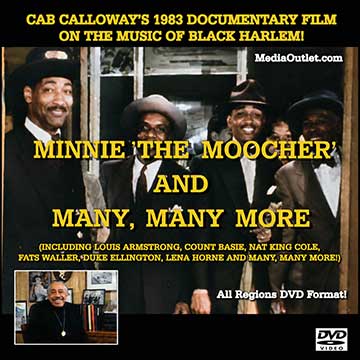
March 31, 1911: #BOTD: #HBD! Freddie
Green, African American swing jazz guitarist who played rhythm
guitar with the Count Basie Orchestra for almost fifty years (d.
March 1, 1987) is #born Frederick William Green in Charleston,
South Carolina. He was exposed to music from an early age, and
learned the banjo before picking up the guitar in his early
teenage years. A friend of his father by the name of Sam Walker
taught a young Freddie to read music, and keenly encouraged him to
keep up his guitar playing. Walker gave Freddie what was perhaps
his first gig, playing with a local community group of which
Walker was an organizer. Another member of the group was William
"Cat" Anderson, who went on to become an established
trumpeter, working with notable figures such as Duke Ellington. It
was around this time that Green's parents died, and he moved to
New York City to live with his aunt and continue his education.
The move opened up a new musical world to Freddie. While still in
his teens, he began to play around the clubs of the city, earning
money and a reputation. In one of these gigs, he was noticed by
the legendary talent scout John H. Hammond, who realized the
potential of Green and introduced him to Basie. In 1937, Basie and
his ensemble went to one of Green's gigs on the advice of an
associate. Basie was an immediate fan, and approached Green with a
job offer. Except for a brief interruption, Freddie Green would
remain a pivotal fixture of the Count Basie Band for the next
fifty years. Green once said "You should never hear the
guitar by itself. It should be part of the drums so it sounds like
the drummer is playing chords - like the snare is in A or the
hi-hat in D minor". Throughout his career, Green played
rhythm guitar, accompanying other musicians, and he rarely played
solos. "His superb timing and ... flowing sense of harmony
... helped to establish the role of the rhythm guitar as an
important part of every rhythm section." Green did play a
solo on the January 16, 1938, Carnegie Hall concert that featured
the Benny Goodman big band known as "The Famous 1938 Carnegie
Hall Jazz Concert". In the jam session on Fats Waller's
"Honeysuckle Rose," Green was the rhythm guitarist for
the ensemble, which featured Basie, Walter Page (Basie's bassist),
and musicians from Duke Ellington's band. After Johnny Hodges'
solo, Goodman signalled to Green to take his own solo, which the
musician Turk Van Lake described in his commentary on the reissued
1938 Carnegie Hall concert as a "startling move." He
rapidly changed chords, often with every beat, rather than every
measure. His chord fingering often involved him covering four
strings with his fingers, while depressing only a subset of the
notes. He dampened the unsounded notes from chords with his left
hand. Green's playing on his signature Stromberg guitar was the
model for Ralph Patt's big-band playing. Green was not a prolific
composer, but he did make two major contributions to Count Basie's
repertoire, "Down for Double" (recorded in 1941) and
"Corner Pocket" (recorded for the album April in Paris
in 1955). Green died of a heart attack in Las Vegas, Nevada at the
age of 75. He is buried in Pinelawn Memorial Park And Arboretum in
East Farmingdale, New York. On Sale @ 15% Off Discount Till
Midnight PT!
https://store.earthstation1.com/minnie-the-moocher-and-many-many-more-dvd-1983-cab-call1984.html
Today's
EarthStation1.com 15% Off Commemorative Memorial Title: The Final
Days: Richard Nixon TV Docudrama DVD, Download, USB Drive
Today, March 31, 2026
March 31, 1922: #BOTD: #HBD! Richard
Kiley, American singer, stage, television, and film actor (d.
March 5, 1999) is #born Richard Paul Kiley in Chicago, Illinois.
Richard Kiley is best known for his distinguished theatrical
career in which he twice won the Tony Award for Best Actor In A
Musical. Kiley created the role of Don Quixote in the original
1965 production of the Broadway musical Man of La Mancha and was
the first to sing and record "The Impossible Dream", the
hit song from the show. In the 1953 hit musical Kismet, he played
the Caliph and was one of the quartet introducing the song "And
This Is My Beloved". Additionally, he won three Emmy Awards
and two Golden Globe Awards during his 50-year career and his
"sonorous baritone" was also featured in the narration
of a number of documentaries and other films. At the time of his
death, Kiley was described as "one of theater's most
distinguished and versatile actors" and as "an
indispensable actor, the kind of performer who could be called on
to play kings and commoners and a diversity of characters in
between." On Sale @ 15% Off Discount Till Midnight PT!
https://store.earthstation1.com/the-final-days-dvd-1989-pres-nixon-resignation-docudrama-2-dis19892.html
Today's
EarthStation1.com 15% Off Commemorative Memorial Title: Great
Depression Films Collection DVD, Video Download, USB Flash Drive
Today, March 31, 2026
March 31, 1933: The Interwar Period (The
Interbellum, Between The Wars): The Great Depression: The Great
Depression In The United States: The New Deal: New Deal Agencies:
The Civilian Conservation Corps (CCC): -- The Civilian
Conservation Corps is established with the mission of relieving
rampant unemployment in the United States. On March 21, 1933,
Franklin D. Roosevelt proposed the CCC to the US Congress. The
Emergency Conservation Work (ECW) Act was introduced to Congress
the same day and enacted by voice vote on March 31, thereby
founding the CCC. It was a public work relief program that
operated from 1933 to 1942 in the United States for unemployed,
unmarried men. Originally for young men ages 18-25, it was
eventually expanded to ages 17-28. The CCC was a major part of
President Franklin D. Roosevelt's New Deal that provided unskilled
manual labor jobs related to the conservation and development of
natural resources in rural lands owned by federal, state, and
local governments. The CCC was designed to provide jobs for young
men and to relieve families who had difficulty finding jobs during
the Great Depression in the United States. Maximum enrollment at
any one time was 300,000. Through the course of its nine years in
operation, 3 million young men participated in the CCC, which
provided them with shelter, clothing, and food, together with a
wage of 30 USD (about 570 USD in 2017) per month, 25 USD of which
had to be sent home to their families. The American public made
the CCC the most popular of all the New Deal programs. Sources
written at the time claimed an individual's enrollment in the CCC
led to improved physical condition, heightened morale, and
increased employability. The CCC also led to a greater public
awareness and appreciation of the outdoors and the nation's
natural resources, and the continued need for a carefully planned,
comprehensive national program for the protection and development
of natural resources. Enrollees of the CCC planted nearly 3
billion trees to help reforest America; constructed trails,
lodges, and related facilities in more than 800 parks nationwide;
and upgraded most state parks, updated forest fire fighting
methods, and built a network of service buildings and public
roadways in remote areas. The CCC operated separate programs for
veterans and Native Asians. Approximately 15,000 Native Asians
participated in the program, helping them weather the Great
Depression. Despite its popular support, the CCC was not a
permanent agency. It depended on emergency and temporary
Congressional legislation and funding to operate. By 1942, with
World War II and the draft in operation, the need for work relief
declined, and Congress voted to close the program. On Sale @ 15%
Off Discount Till Midnight PT!
https://store.earthstation1.com/great-depression-films-2-dvd-se2.html
Today's
EarthStation1.com 15% Off Commemorative Memorial Title: The
Machine That Changed The World The Computer + Bonus 3 MP4s Or DVDs
Today, March 31, 2026
March 31, 1951: The History Of The
Computer: The History Of The Computer Industry: The History Of
Mainframe Computers: UNIVAC :UNIVAC I (Universal Automatic
Computer I) -- Remington Rand delivers the first UNIVAC I computer
to the United States Census Bureau. The UNIVAC I (UNIVersal
Automatic Computer I) was the first general-purpose electronic
digital computer design for business application produced in the
United States. It was designed principally by J. Presper Eckert
and John Mauchly, the inventors of the ENIAC. Design work was
started by their company, Eckert-Mauchly Computer Corporation
(EMCC), and was completed after the company had been acquired by
Remington Rand (which later became part of Sperry, now Unisys). In
the years before successor models of the UNIVAC I appeared, the
machine was simply known as "the UNIVAC". The first
Univac was accepted by the United States Census Bureau on March
31, 1951, and was dedicated on June 14 that year. The fifth
machine (built for the U.S. Atomic Energy Commission) was used by
CBS to predict the result of the 1952 presidential election. With
a sample of a mere 5.5% of the voter turnout, it famously
predicted an Eisenhower landslide. On Sale @ 15% Off Discount Till
Midnight PT!
https://store.earthstation1.com/the-machine-that-changed-the-world-the-computer-dvd-mp4-downloa4.html
Today's
EarthStation1.com 15% Off Commemorative Memorial Title: The
Satellite Sky: The Space Race DVD, Video Download, USB Flash Drive
Today, March 31, 2026
March 31, 1966: Rocket Launches: The
History Of Spaceflight: The Aftermath Of World War II: The Cold
War: The Space Age: The Space Race: Missions To The Moon: Space
Probes: Lunar Space Probes: The Soviet Space Program: The Luna
Programme (Pejorative: The Lunik Program): Outer Space Firsts:
Luna 10 (Pejorative: Lunik 10, Lunik X): -- The lunar probe Luna
10 (Lunik 10), the first artificial satellite of the Moon, is
launched by the Soviet Union at 10:48:00 GMT from Site 31/6 at
Baikonur Cosmodrome in Kazakhstan atop a Molniya-M 8K78M rocket.
It was thereafter launched towards the Moon from an Earth-orbiting
platform later that day, and the spacecraft entered lunar orbit on
April 3, 1966, completing its first orbit 3 hours later (on April
4 Moscow time). Luna 10 was battery powered and operated for 460
lunar orbits and 219 active data transmissions before radio
signals were discontinued on May 30, 1966. Luna 10 (E-6S series)
or Lunik 10 was the tenth of the Soviet Union's Luna programme
spacecraft launched to the Moon. Luna 10 conducted extensive
research in lunar orbit, gathering important data on the strength
of the Moon's magnetic field, its radiation belts, and the nature
of lunar rocks (which were found to be comparable to terrestrial
basalt rocks), cosmic radiation, and micrometeoroid density.
Perhaps its most important finding was the first evidence of mass
concentrations called "mascons" -- areas of high density
below the mare basins that distort lunar orbital trajectories.
Their discovery has usually been credited to the American Lunar
Orbiter series. On Sale @ 15% Off Discount Till Midnight PT!
https://store.earthstation1.com/the-satellite-sky-dvd-cold-war-space-race-films.html
Today's
EarthStation1.com 15% Off Commemorative Memorial Title: Lyndon
Johnson (1986) Laurence Luckinbill MP4 Video Download DVD
Today, March 31, 2026
March 31, 1968: The Aftermath Of World
War II: The Cold War: The Cold War In Asia: The Indochina Wars:
The Vietnam War (The Second Indochina War, The Vietnam Conflict,
The Resistance War Against America): The Presidency Of Lyndon B.
Johnson: Addresses To The Nation: Oval Office Addresses: The Oval
Office Addresses Of Lyndon B. Johnson: Steps To Limit The War In
Vietnam ("I Shall Not Seek, And I Will Not Accept, The
Nomination Of My Party For Another Term As Your President"):
-- American President Lyndon B. Johnson speaks to the nation of
"Steps To Limit The War In Vietnam" in a television
address. At the conclusion of his speech, as a result of America's
involvement the Vietnam War, President Lyndon Johnson makes a
surprise announcement: "I shall not seek, and I will not
accept, the nomination of my party for another term as your
President." On January 30, the Viet Cong and North Vietnamese
launched the Tet Offensive against South Vietnam's five largest
cities, including Saigon and the U.S. embassy there and other
government installations. While the Tet offensive failed
militarily, it was a psychological victory, definitively turning
American public opinion against the war effort. Iconically, Walter
Cronkite of CBS news, voted the nation's "most trusted
person" in February, expressed on the air that the conflict
was deadlocked and that additional fighting would change nothing.
Johnson reacted, saying "If I've lost Cronkite, I've lost
middle America". Indeed, demoralization about the war was
everywhere; 26 percent then approved of Johnson's handling of
Vietnam; 63 percent disapproved. Johnson agreed to increase the
troop level by 22,000, despite a recommendation from the Joint
Chiefs for ten times that number. By March 1968, Johnson was
secretly desperate for an honorable way out of the war. Clark
Clifford, the new Defense Secretary, described the war as "a
loser" and proposed to "cut losses and get out". On
March 31, Johnson spoke to the nation of "Steps to Limit the
War in Vietnam". He then announced an immediate unilateral
halt to the bombing of North Vietnam and announced his intention
to seek out peace talks anywhere at any time. At the close of his
speech he also announced, "I shall not seek, and I will not
accept, the nomination of my party for another term as your
President". He then announced a bombing halt with the result
that 90 percent of North Vietnam's population and 75 percent of
its territory was off-limits to bombing. On Sale @ 15% Off
Discount Till Midnight PT!
https://store.earthstation1.com/lyndon-johnson-dvd-1986-laurence-luckinbill-david-suss1986.html
Today's
EarthStation1.com 15% Off Commemorative Memorial Title: Subways
Trains & Railroads! Rail Transport History DVD, Download, USB
Today, March 31, 2026
March 31, 1980: The History Of Rail
Transport (The History Of Railways): The History Of Rail
Transportation In The United States: -- The Chicago, Rock Island
And Pacific Railroad operates its final train after being ordered
to liquidate its assets because of bankruptcy and debts owed to
creditors. The original Chicago, Rock Island and Pacific Railroad
(C. R. I. & P. R. W.) sometimes called The Chicago, Rock
Island and Pacific Railway) (reporting marks CRIP, RI, ROCK) was
an American Class I railroad. It was also known as the Rock Island
Line, or, in its final years, The Rock, and is best known to the
general public in song as "The Rock Island Line", a
spiritual folk song that appeared in 1929 and was first recorded
in 1934 by folklorist and musicologist John A. Lomax at the
Tucker, Arkansas prison farm on September 29, 1934 of Lead Belly
(Huddie William Ledbetter). At the end of 1970 it operated 7183
miles of road on 10669 miles of track, and operated though
Arkansas, Colorado, Illinois, Iowa, Kansas, Louisiana, Minnesota,
Missouri, Nebraska, New Mexico, Oklahoma, South Dakota, Tennessee,
and Texas. On Sale @ 15% Off Discount Till Midnight PT!
https://store.earthstation1.com/subways-trains-and-railroads-locomotive-films-2-dual-layer-dvd2.html
Today's
EarthStation1.com #OnThisDay Commemorative Memorial Title: The
Historical View A Legacy In Pictures JPG Image Set CD Download USB
Today, March 31, 2026 March 31: Chronology: Calendars: The
Months Of The Year: -- The month of March ends, the third month of
the year in both the Julian and Gregorian calendars. Its length is
31 days. In the Northern Hemisphere, the meteorological beginning
of spring occurs on the first day of March. The March equinox on
the 20 or 21 marks the astronomical beginning of spring in the
Northern Hemisphere and the beginning of autumn in the Southern
Hemisphere, where September is the seasonal equivalent of the
Northern Hemisphere's March. The name of March comes from Martius,
the first month of the earliest Roman calendar. It was named after
Mars, the Roman god of war, and an ancestor of the Roman people
through his sons Romulus and Remus. His month Martius was the
beginning of the season for warfare, and the festivals held in his
honor during the month were mirrored by others in October, when
the season for these activities came to a close. Martius remained
the first month of the Roman calendar year perhaps as late as 153
BC, and several religious observances in the first half of the
month were originally new year's celebrations. Even in late
antiquity, Roman mosaics picturing the months sometimes still
placed March first. March 1 began the numbered year in Russia
until the end of the 15th century. Great Britain and its colonies
continued to use March 25 until 1752, when they finally adopted
the Gregorian calendar (the fiscal year in the UK continues to
begin on April 6, initially identical to March 25 in the former
Julian calendar). Many other cultures, for example in Iran, or
Ethiopia, still celebrate the beginning of the New Year in March.
March is the first month of spring in the Northern Hemisphere
(North America, Europe, Asia and part of Africa) and the first
month of fall or autumn in the Southern Hemisphere (South America,
part of Africa, and Oceania). Ancient Roman observances celebrated
in March include Agonium Martiale, celebrated on March 1, March
14, and March 17, Matronalia, celebrated on March 1, Junonalia,
celebrated on March 7, Equirria, celebrated on March 14,
Mamuralia, celebrated on either March 14 or March 15, Hilaria on
March 15 and then through March 22-28, Argei, celebrated on March
16-17, Liberalia and Bacchanalia, celebrated March 17,
Quinquatria, celebrated March 19-23, and Tubilustrium, celebrated
March 23. These dates do not correspond to the modern Gregorian
calendar.
https://store.earthstation1.com/the-historical-view-a-legacy-in-pictures-jpg-photo-cd.html
March 31: Chronology: Calendars: The
Months Of The Year: -- The month of March ends, the third month of
the year in both the Julian and Gregorian calendars. Its length is
31 days. In the Northern Hemisphere, the meteorological beginning
of spring occurs on the first day of March. The March equinox on
the 20 or 21 marks the astronomical beginning of spring in the
Northern Hemisphere and the beginning of autumn in the Southern
Hemisphere, where September is the seasonal equivalent of the
Northern Hemisphere's March. The name of March comes from Martius,
the first month of the earliest Roman calendar. It was named after
Mars, the Roman god of war, and an ancestor of the Roman people
through his sons Romulus and Remus. His month Martius was the
beginning of the season for warfare, and the festivals held in his
honor during the month were mirrored by others in October, when
the season for these activities came to a close. Martius remained
the first month of the Roman calendar year perhaps as late as 153
BC, and several religious observances in the first half of the
month were originally new year's celebrations. Even in late
antiquity, Roman mosaics picturing the months sometimes still
placed March first. March 1 began the numbered year in Russia
until the end of the 15th century. Great Britain and its colonies
continued to use March 25 until 1752, when they finally adopted
the Gregorian calendar (the fiscal year in the UK continues to
begin on April 6, initially identical to March 25 in the former
Julian calendar). Many other cultures, for example in Iran, or
Ethiopia, still celebrate the beginning of the New Year in March.
March is the first month of spring in the Northern Hemisphere
(North America, Europe, Asia and part of Africa) and the first
month of fall or autumn in the Southern Hemisphere (South America,
part of Africa, and Oceania). Ancient Roman observances celebrated
in March include Agonium Martiale, celebrated on March 1, March
14, and March 17, Matronalia, celebrated on March 1, Junonalia,
celebrated on March 7, Equirria, celebrated on March 14,
Mamuralia, celebrated on either March 14 or March 15, Hilaria on
March 15 and then through March 22-28, Argei, celebrated on March
16-17, Liberalia and Bacchanalia, celebrated March 17,
Quinquatria, celebrated March 19-23, and Tubilustrium, celebrated
March 23. These dates do not correspond to the modern Gregorian
calendar.
https://store.earthstation1.com/the-historical-view-a-legacy-in-pictures-jpg-photo-cd.html
Today's
EarthStation1.com #OnThisDay Commemorative Memorial Title:
Propaganda Posters JPG Photo + MPG Video DVD-ROM, Download, USB
Stick
Today, March 31, 2026March 31: National Tater Day: -- An
annual day of love for potatoes! Bake 'em, boil 'em, fry 'em, mash
'em -- they will always taste heavenly! The versatility potatoes
lend means that they are great for both salty and sweet cuisines,
either elevating the taste of a dish or complimenting the
accompanying flavors. This tubular vegetable also holds the credit
of solving food shortages, both in the old ages and the new. But
at the same time, the vegetable has had its fair share of bad rep
too. During a particularly bad food shortage, people in Germany
refused to eat potatoes, which their king had made available in
abundance. Germans at that time deemed it a 'lowly' food not
deserving of their gastronomic cravings. The much-adored tater
evolved from the nightingale plant almost 350 million years ago.
But its earliest recorded instance in history is much later than
that. Potatoes were first cultivated as food in the Peruvian
Andes. Since potatoes grew best in higher altitude conditions, the
crops were mostly planted atop a mountain valley, near Lake
Titicaca. As centuries passed by, potatoes grew in popularity and
trade due to their low-maintenance features and high nutritional
values. It was due to the tubular vegetable's low-maintenance
quality that they were being planted in larger and larger acres of
land. This meant more food for people in the long run, and this is
also the reason why potatoes were used by rulers and lords to
solve food shortages amongst the masses. One interesting example
is Prussia in the 1700s. The king, Frederick the Great, decreed
potatoes to be given to the masses, especially the poor, as
protection against famine. However, many refused the food as they
considered taters to be disgusting. Seeing this, the king came up
with a strategy and ordered the potato fields to be cordoned off
and labeled as 'food for the royals.' But soon after, people
'stole' the potatoes for eating. The king's plan had worked and
the masses were fed. More recently in tater history, people have
been celebrating National Tater Day since 1843. Traders would come
and exchange goods, particularly potato slips that allowed them to
buy and grow the plant. This is the oldest trade convention ever
known and celebrated. While it may have had its fair share of ups
and downs, the tater is loved and enjoyed by many today.
https://store.earthstation1.com/propaganda-posters-cd-jpg-images.html
Today's
EarthStation1.com #OnThisDay Commemorative Memorial Title:
Speeches Of Winston Churchill MP3 & JPG Set CD-ROM Download
USB Drive
Today, March 31, 2026March 31: National Crayon Day: -- Spark
fond memories of childhood creations in full color as we celebrate
one of America's most beloved toys, the crayon, and the art
created using crayons! Crayons delight our senses not just with
their brilliant colors but also with their distinct smell, the
feel of them in our hands, and for some kids, the waxy taste. With
over 12 million crayons made daily, one is never far from reach.
So, grab your box of 64 crayons, sharpener included, and get ready
for some artistic expression and nostalgia. Crayons have a
colorful history. While hued wax molds have existed for centuries,
the modern-day crayon got its start in the 1900s. Crayola crayons
were introduced in 1903 by Binney & Smith as a safer and
cheaper alternative to the art utensils in use at that time.
Binney & Smith premiered their famous eight-pack of crayons
with the color line-up: Black, Brown, Orange, Violet, Blue, Green,
Red, and Yellow. This color mix, along with their names, remained
unchanged for 45 years. Since then, many colors have been added,
color names and packaging have changed, and color styles such as
neon, metallics, and glitter have emerged. A few colors have even
been retired from the color wheel, typically on March 31. The
Crayola crayon has a special place in the hearts of Americans and
Americana. It was one of the original inductees into the National
Toy Hall of Fame in November 1999. It is estimated the average
American will have used 730 crayons by their 10th birthday. Even
Mr. Fred Rogers has had his hand in the history of crayons by
molding the official 100 billionth crayon in February 1996 at the
Crayola plant in Easton. Crayons not only add color to our lives,
but they've also been held as an analogy for the colorfulness of
the human race and our ability to live together in a diverse
world. Robert Fulghum, the American author, once said, "We
could learn a lot from crayons; some are sharp, some are pretty,
some are dull, while others bright, some have weird names, but
they all have learned to live together in the same box."
https://store.earthstation1.com/the-speeches-of-winston-churchill-mp3-cd--jpg-image-galler3.html
Today's
EarthStation1.com #OnThisDay Commemorative Memorial Title:
Timeline Middle Ages TV Newscast Series + Bonus MP4 Video Download
DVD
Today, March 31, 2026March 31: Hug A Medievalist Day: -- A day
to demonstrate love to medievalists. These are people who are
greatly attracted to the art, culture, and philosophy of the
middle ages in Europe. Medievalists are known to study this
timeframe's architecture, literature, music, art, and all other
aspects of culture. The idea of celebrating this day comes from
Sarah Laseke, who is currently studying for an MS in Medieval
Literature at the University of Oxford. She believed that
medievalists also deserved an official celebration day, so she
established the event on Facebook. Laseke wanted to create a day
on which medievalists would be the center of attention. In
European history, the medieval period, also known as the Middle
Ages, lasted approximately from the fifth to the late fifteenth
century. Beginning with the fall of the Western Roman Empire, it
also transitioned into the Renaissance and the Age of Discovery.
The Middle Ages is the middle period of the three traditional
divisions of Western history: classical antiquity, the medieval
period, and the modern period. The medieval period is divided into
the early, high, and late Middle Ages. In the Early Middle Ages,
population decline, counter-urbanization, the collapse of
centralized authority, invasions, and mass migrations of tribes
occurred. The migration period's large-scale movements created new
kingdoms in what remained of the Western Roman Empire. During the
High Middle Ages, the population of Europe rose significantly due
to technological and agricultural advancements that allowed trade
to flourish, and the Medieval Warm Period climatic shift that
allowed crop yields to increase. The Late Middle Ages was the most
challenging period. It was marked by difficulties and calamities,
including plague, famine, and war, which significantly diminished
the population of Europe. The Black Death killed about a third of
Europeans between 1347 and 1350. Controversy, heresy, and the
Western Schism within the Catholic Church followed the kingdoms'
interstate struggle, civil strife, and peasant revolts. Cultural
and technological changes reshaped European society as the late
middle ages came to an end and the early modern period began.
https://store.earthstation1.com/timeline-tv-series-on-the-middle-ages-in-tv-newscast-format-2-dvd-se2.html
Today's
EarthStation1.com #OnThisDay Commemorative Memorial Title:
Pioneers Of Surgery Documentary TV Series DVD, MP4 Download, USB
Drive
Today, March 31, 2026March 31: Anesthesia Tech Day: An annual
honoring of the technologists and technicians for their
contributions toward anesthesiology and healthcare.
Anesthesiologists are integral members of the global medical
field, and their efforts are unparalleled. It's a day of education
for aspiring medical and healthcare professionals, a celebration
of scientific breakthroughs, and fundraising for future research.
Learn about the history of anesthesia, including the discoveries
that made surgical treatment more comfortable for patients. The
origin of anesthesia dates back to ancient times when Babylons,
Greeks, and Chinese used natural herbs to be taken orally. Later
in the 1200s, Italian physician and bishop Theodoric of Lucca used
sponges soaked in mandrake plant extract and opium to relieve
surgical pain. The breakthrough of actual medical anesthesia that
we know today didn't come immediately. Throughout the centuries,
patients who underwent surgery had to tolerate the pain or rely on
opium, alcohol, or even a bullet to bite to relieve the agony.
When the Civil War came, and soldiers had to undergo surgeries and
amputations regularly, it was clear that developing more advanced
anesthesia had to be a priority for medical professionals. The
first surgical procedure that used anesthesia was in 1846. Dentist
William T.G. Morton of Boston Massachusetts used sulfuric ether to
anesthetize a patient for a vascular tumor removal surgery. Morton
called this discovery 'Letheon' after the Lethe River of Greek
mythology which was described as a powerful river that helps
remove painful memories. He gained financial success after this
discovery. The vast evolution took place in attempts to improve
the performance of anesthesia in the medical field. This includes
the discovery of laughing gas in 1844 and the successful use of
cocaine as a spinal anesthetic in 1898. In 1902, Dr. Mathias J.
Seifert of Chicago patented the terms 'anesthesiology' and
'anesthesiology.' Today, modern anesthesia is a standard tool for
medicine and surgeries and tailored according to a patient's
needs. From dentistry, and cosmetics, to general medicine,
anesthesia has come a long way.
https://store.earthstation1.com/pioneers-of-surgery-dvd-set-4-episode-tv-series-2-dis42.html
Today's
EarthStation1.com #OnThisDay Commemorative Memorial Title: Dead
End Kids: A Story Of Nuclear Power Film Satire DVD, Download, USB
Today, March 31, 2026March 31: National Bunsen Burner Day: --
Remembers the history of science and the inventor behind this
important tool. Found in every high-school laboratory, the Bunsen
Burner is a staple of our scientific education, as well as
essential in professional laboratories, too. We've got all the
facts, features, and fun activities to set your celebrations
alight this National Bunsen Burner Day! obert Bunsen was born in
Germany in 1811. His father was the chief librarian and professor
of modern philology at the University of Gottingen where Bunsen
later embarked on his undergraduate degree at the age of 17. He
showed his aptitude for innovation early on and, within just two
years, he had completed his Ph.D. and was offered a job there.
Bunsen enjoyed a significant breakthrough at the young age of 22
when he discovered the antidote to arsenic poisoning. But the
invention he is best known for today, the Bunsen burner, became
his pursuit in 1852 when he took a job at the University of
Heidelberg, where he was promised a new laboratory for his work
and teaching. The building's designers intended to use gas
throughout for lighting as well as the laboratory burners. But gas
burners were problematic due to the heat of the flame, as well as
their simplicity. So whilst the builders got to work on Bunsen's
new lab, Bunsen himself also got to work designing a way to make
gas burners more effective for laboratory use. He developed a
gas-burning apparatus that would give different types of flame
depending on the airflow, using Isaac Newton's principle of light
refraction to give four flames of different colors and
intensities. When the building opened in 1855, Bunsen had created
50 of his burners and, in 1857, he published a description of them
so that his colleagues could adopt the design. Despite its
success, he never patented the idea, as he believed that science
should be for the benefit of all and not the profit of one. His
design grew in popularity and is still used around the world today
in schools and professional laboratories, hence the reason we
celebrate National Bunsen Burner Day.
https://store.earthstation1.com/dead-end-kids-a-story-of-nuclear-power-1986-dvd-history-sa1986.html
Today's
EarthStation1.com #OnThisDay Commemorative Memorial Title: The
Machine That Changed The World The Computer + Bonus 3 MP4s Or DVDs
Today, March 31, 2026March 31: World Backup Day: -- We're
fortunate enough to have access to the most powerful computers to
date, but what would you do if you lost everything on your
computer? Crashes happen more often than you think, data recovery
can cost you hundreds of dollars, and recovering everything you've
stored on your computer is not guaranteed. The observation
originally started as World Backup Month, and later changed to
World Backup Day. Maxtor, a company specializing in hard drives,
initiated this annual celebration. Now taking place every year on
March 31, World Backup Day reminds us to make multiple copies of
our digital treasures, or risk losing them all forever. The day
also serves to instill better online and technological practices.
Considering how reliant humans are on technology now, we still
haven't cultivated habits that will ensure that our information
and personal data are secure and safe. It happens to all of us -
that one precious photo or video that was captured to immortalize
a moment, but it doesn't exist anymore. Broken hard drives, hacked
computers, erratic phones, or any other glitch that erased
irretrievable items, we've all experienced it. World Backup Day
falls on the day before April Fools Day, which is perfect timing.
Pranksters and hackers are prone to play jokes on unsuspecting
individuals, so it's better to be safe than sorry. The holiday was
observed for the first time in 2011 and over time, has become that
one day when we won't say "we'll back it up tomorrow."
https://store.earthstation1.com/the-machine-that-changed-the-world-the-computer-dvd-mp4-downloa4.html
Today's
EarthStation1.com #OnThisDay Commemorative Memorial Title: Isaac
Newton: Portraits Of Newton DVD, Video Download, USB Flash Drive
Today, March 31, 2026March 31, 1727 (NS; March 20 OS): #DOTD:
#RIP: Isaac Newton, English mathematician, astronomer, theologian,
physicist and occultist (described in his own day as a "natural
philosopher") who is widely recognised as one of the most
influential scientists of all time and a key figure in the
scientific revolution (b. January 4, 1643 [Gregorian New Style
Calendar]) #dies in his sleep of natural causes in London aged 84.
He was given a ceremonial funeral, attended by nobles, scientists,
and philosophers, and was buried in Westminster Abbey among kings
and queens. He is also the first scientist to be buried in the
abbey. Voltaire may have been present at his funeral. A bachelor,
he had divested much of his estate to relatives during his last
years, and died intestate. His papers went to John Conduitt and
Catherine Barton. After his death, Newton's hair was examined and
found to contain mercury, probably resulting from his alchemical
pursuits. Mercury poisoning could explain Newton's eccentricity in
late life. Sir Isaac Newton PRS was #born in Woolsthorpe,
Lincolnshire, England. His book Philosophiae Naturalis Principia
Mathematica ("Mathematical Principles of Natural
Philosophy"), first published in 1687, laid the foundations
of classical mechanics. Newton also made pathbreaking
contributions to optics, and he shares credit with Gottfried
Wilhelm Leibniz for developing the infinitesimal calculus.
Newton's Principia formulated the laws of motion and universal
gravitation that dominated scientists' view of the physical
universe for the next three centuries. By deriving Kepler's laws
of planetary motion from his mathematical description of gravity,
and using the same principles to account for the trajectories of
comets, the tides, the precession of the equinoxes, and other
phenomena, Newton removed the last doubts about the validity of
the heliocentric model of the Solar System and demonstrated that
the motion of objects on Earth and of celestial bodies could be
accounted for by the same principles. Newton's theoretical
prediction that the Earth is shaped as an oblate spheroid was
later vindicated by the geodetic measurements of Maupertuis, La
Condamine, and others, thus convincing most Continental European
scientists of the superiority of Newtonian mechanics over the
earlier system of Descartes. Newton also built the first practical
reflecting telescope and developed a sophisticated theory of
colour based on the observation that a prism decomposes white
light into the colours of the visible spectrum. Newton's work on
light was collected in his highly influential book Opticks, first
published in 1704. He also formulated an empirical law of cooling,
made the first theoretical calculation of the speed of sound, and
introduced the notion of a Newtonian fluid. Newton was a fellow of
Trinity College and the second Lucasian Professor of Mathematics
at the University of Cambridge. He was a devout but unorthodox
Christian, who privately rejected the doctrine of the Trinity and
who, unusually for a member of the Cambridge faculty of the day,
refused to take holy orders in the Church of England. Beyond his
work on the mathematical sciences, Newton dedicated much of his
time to the study of alchemy and biblical chronology, but most of
his work in those areas remained unpublished until long after his
death. Politically and personally tied to the Whig party, Newton
served two brief terms as Member of Parliament for the University
of Cambridge, in 1689-90 and 1701-02. He was knighted by Queen
Anne in 1705 and he spent the last three decades of his life in
London, serving as Warden (1696-1700) and Master (1700-1727) of
the Royal Mint, as well as president of the Royal Society
(1703-1727). He died in his sleep in London, England, aged 84. He
was given a ceremonial funeral, attended by nobles, scientists,
and philosophers, and was buried in Westminster Abbey among kings
and queens. He was the first scientist to be buried in the abbey.
Voltaire may have been present at his funeral. A bachelor, he had
divested much of his estate to relatives during his last years,
and died intestate. His papers went to his half-niece Catherine
Barton and her husband John Conduitt, which whom Newton took up
residence at Cranbury Park, near Winchester, England toward the
end of his life. Shortly after his death, a plaster death mask was
moulded of Newton. It was used by Flemish sculptor John Michael
Rysbrack in making a sculpture of Newton. It is now held by the
Royal Society, who created a 3D scan of it in 2012. Newton's hair
was posthumously examined and found to contain mercury, probably
resulting from his alchemical pursuits. Mercury poisoning could
explain Newton's eccentricity in late life. #IsaacNewton
#Mathematicians #Astronomers #Theologians #Physicists
#NaturalPhilosophers #ScientificRevolution
https://store.earthstation1.com/isaac-newton-portraits-of-newton-dvd-documentary.html
Today's
EarthStation1.com #OnThisDay Commemorative Memorial Title:
Washington, D.C. History Video Set DVD, MP4 Download, USB Flash
Drive
Today, March 31, 2026March 31, 1948: #BOTD: #HBD! Al Gore,
American soldier, politician, businessman, and environmentalist,
elected official for 24 years, United States Senator from
Tennessee, member of the U.S. House of Representatives, 45th Vice
President Of The United States under President Bill Clinton, and
Nobel Prize laureate, falsely accused of claiming to have invented
the internet, Democratic nominee for president of the United
States in the 2000 presidential election, an election which he
actually won but lost it to George W. Bush when the United States
Supreme Court ordered Florida not to do a recount that
subsequently showed he would have won the electoral votes
necessary to become president, is #born Albert Arnold Gore Jr. in
Washington, D.C. as the second of two children born to Albert Gore
Sr., a U.S. Representative who later served for 18 years as a U.S.
Senator from Tennessee, and Pauline (LaFon) Gore, one of the first
women to graduate from Vanderbilt University Law School. Gore is a
descendant of Scots Irish immigrants who first settled in Virginia
in the mid-17th-century and moved to Tennessee after the
Revolutionary War. Al Gore served as vice president during the
Clinton administration from 1993 to 2001, defeating incumbents
George H. W. Bush and Dan Quayle in 1992, and Bob Dole and Jack
Kemp in 1996. As of 2023, Gore's 1990 re-election remains the last
time Democrats won a Senate election in Tennessee. Gore was the
Democratic nominee for president of the United States in the 2000
presidential election - in which he lost the electoral college
vote 266-271 to Republican nominee George W. Bush, despite winning
the popular vote by approximately 543,895 votes. The election
concluded after the Supreme Court of the United States ruled 5-4
in Bush v. Gore against a previous ruling by the Supreme Court of
Florida on a re-count that would have likely given Gore a
razor-thin lead in the state of Florida, had the re-count
continued as planned. He is one of five presidential candidates in
American history to lose a presidential election despite winning
the popular vote. After his term as vice-president ended in 2001,
Gore remained prominent as an author and environmental activist,
whose work in climate change activism earned him (jointly with the
IPCC) the Nobel Peace Prize in 2007. Gore is the founder and
current chair of The Climate Reality Project, the co-founder and
chair of Generation Investment Management, the now-defunct Current
TV network, a member of the Board of Directors of Apple Inc. and a
senior adviser to Google. Gore is also a partner in the venture
capital firm Kleiner Perkins, heading its climate change solutions
group. He has served as a visiting professor at Middle Tennessee
State University, Columbia University Graduate School of
Journalism, Fisk University and the University of California, Los
Angeles. He served on the Board of Directors of World Resources
Institute. Gore has received a number of awards that include the
Nobel Peace Prize (joint award with the Intergovernmental Panel on
Climate Change, 2007), a Primetime Emmy Award for Current TV
(2007), and a Webby Award (2005). Gore was also the subject of the
Academy Award winning (2007) documentary An Inconvenient Truth in
2006, as well as its 2017 sequel An Inconvenient Sequel: Truth to
Power. In 2007, he was named a runner-up for Time's 2007 Person of
the Year. In 2008, Gore won the Dan David Prize for Social
Responsibility.
https://store.earthstation1.com/washington-dc-history-videos-dvd-mp4-download-usb-driv4.html
Today's
EarthStation1.com #OnThisDay Commemorative Memorial Title: The
Popul Vuh Maya Creation Myth + Bonus Fall Of The Maya DVD MP4 USB
Today, March 31, 2026March 31, 1999: #DOTD: #RIP: Yuri
Knorozov, Soviet soldier, linguist, epigrapher, ethnographer and
Mayanist, who is particularly renowned for the pivotal role his
research played in the decipherment of the Maya script, the
writing system used by the pre-Columbian Maya civilization of
Mesoamerica, recipient of the Order of the Aztec Eagle, the
highest decoration awarded by Mexico to non-citizens (b. November
19, 1922) #dies in Saint Petersburg on March 31, 1999, of
pneumonia in the corridors of a city hospital (his daughter
Ekaterina Knorozova declares that he died in a regular hospital
ward at 6 am, surrounded by the care of his family during his last
days), just before he was due to receive the honorary
Proskouriakoff Award from Harvard University. His burial details
are not publicly disclosed. Yuri Knorozov was born Yuri
Valentinovich Knorozov in the village Pivdenne near Kharkiv, at
that time the capital of the newly formed Ukrainian Socialist
Soviet Republic. His parents were Russian intellectuals, and his
paternal grandmother Maria Sakhavyan had been a stage actress of
national repute in Armenia. At school, the young Yuri was a
difficult and somewhat eccentric student, who made indifferent
progress in a number of subjects and was almost expelled for poor
and willful behaviour. However, it became clear that he was
academically bright with an inquisitive temperament; he was an
accomplished violinist, wrote romantic poetry and could draw with
accuracy and attention to detail. In 1940 at the age of 17,
Knorozov left Kharkiv for Moscow where he commenced undergraduate
studies in the newly created Department of Ethnology at Moscow
State University's department of History. He initially specialised
in Egyptology. Knorozov's study plans were soon interrupted by the
outbreak of World War II hostilities along the Eastern Front in
mid-1941. From 1943 to 1945 Knorozov served his term in the second
world war in the Red Army as an artillery spotter. At the closing
stages of the war in May 1945, Knorozov and his unit supported the
push of the Red Army vanguard into Berlin. It was here, sometime
in the aftermath of the Battle of Berlin, that Knorozov retrieved
a book from the German National Library which would spark his
later interest in and association with deciphering the Maya
script, a book which remarkably enough turned out to be a rare
edition containing reproductions of the three Maya codices which
were then known: the Dresden, Madrid and Paris codices. In 1952,
the then 30-year-old Knorozov published a paper which was later to
prove to be a seminal work in the field, "Ancient Writing of
Central America". The general thesis of this paper put
forward the observation that early scripts such as ancient
Egyptian and Cuneiform which were generally or formerly thought to
be predominantly logographic or even purely ideographic in nature,
in fact contained a significant phonetic component. Upon the
publication of this work from a then hardly known scholar,
Knorozov and his thesis came under some severe and at times
dismissive criticism. The situation was further complicated by
Knorozov's paper appearing during the height of the Cold War, and
many were able to dismiss his paper as being founded on misguided
Marxist-Leninist ideology and polemic. Indeed, in keeping with the
mandatory practices of the time, Knorozov's paper was prefaced by
a foreword written by the journal's editor which contained
digressions and propagandist comments extolling the
State-sponsored approach by which Knorozov had succeeded where
Western scholarship had failed. However, despite claims to the
contrary by several of Knorozov's detractors, Knorozov himself
never did include such polemic in his writings. Knorozov persisted
with his publications in spite of the criticism and rejection of
many Mayanists of the time. He was perhaps shielded to some extent
from the ramifications of peer disputation, since his position and
standing at the institute was not adversely influenced by
criticism from Western academics. Prof. Michael D. Coe (May 14,
1929 - September 25, 2019), American archaeologist,
anthropologist, epigrapher and author, among the foremost
Mayanists of the modern era and known for his research on
pre-Columbian Mesoamerica generally and the Maya particularly,
wrote "Yuri Knorozov, a man who was far removed from the
Western scientific establishment and who, prior to the late 1980s,
never saw a Mayan ruin nor touch a real Mayan inscription, had
nevertheless, against all odds, "made possible the modern
decipherment of Maya hieroglyphic writing." As his theories
became more widely known, Knorozov was in 1956 granted leave to
attend an international convention of Mesoamerican scholars in
Copenhagen. This was to be his one and only venture for quite some
time, since as a Soviet academic, Knorozov was subject to the
usual restrictions placed on travel abroad. Over subsequent years
western Mayanists needed to travel to Leningrad to meet up with
him. It was not until 1990 that he was eventually able to leave
Russia again and finally visit the ancient Maya homelands and
archaeological sites in Mexico and Guatemala. This was at the
invitation of the Guatemalan President Marco Vinicio Cerezo
Arevalo, at a time of improved diplomatic relations between the
two countries. Cerezo presented him with an honorary medal, and
Knorozov was able to extend his stay in the region, visiting
several of the important Maya sites such as Tikal. The government
of Mexico awarded him the Orden del Aguila Azteca (Order of the
Aztec Eagle), the highest decoration awarded by Mexico to
non-citizens, which was presented to him at a ceremony at the
Mexican Embassy in Moscow on November 30, 1994. Knorozov had broad
interest in, and contributed to, other investigative fields such
as archaeology, semiotics, human migration to the Americas and the
evolution of the mind. However, it is his contributions to the
field of Maya studies for which he is best remembered. In his very
last years, Knorozov is also known to have pointed to a place in
the United States as the likely location of Chicomoztoc, the
ancestral land from which, according to ancient documents and
accounts considered mythical by a sizable number of scholars,
indigenous peoples now living in Mexico are said to have come.
https://store.earthstation1.com/popul-vuh-dvd-animated-mayan-hero-twins-creation-myth.html
Today's
EarthStation1.com #OnThisDay Commemorative Memorial Title: Jack
Benny Presents Golden Memories Of Radio LPs CD, MP3 Download, USB
Today, March 31, 2026March 31, 1980: #DOTD: #RIP: Jesse Owens,
originally known as J.C., African American track and field athlete
and four-time Olympic gold medalist in the 1936 Games (b.
September 12, 1913) #dies with his wife and other family members
at his bedside at age 66 in Tucson, Arizona of lung cancer, likely
caused by smoking a pack of cigarettes a day starting at age 32.
He is buried next to the Lake of Memories at Oak Woods Cemetery in
Chicago. Jesse Owens was born James Cleveland Owens, originally
known as J.C., in Oakville, Alabama to sharecroppers Cleveland
Owens and Mary Emma Fitzgerald. Jesse Owens specialized in the
sprints and the long jump and was recognized in his lifetime as
"perhaps the greatest and most famous athlete in track and
field history". He set three world records and tied another,
all in less than an hour at the 1935 Big Ten track meet in Ann
Arbor, Michigan-a feat that has never been equaled and has been
called "the greatest 45 minutes ever in sport". He
achieved international fame at the 1936 Summer Olympics in Berlin,
Germany by winning four gold medals: 100 meters, 200 meters, long
jump, and 4 _ 100 meter relay. He was the most successful athlete
at the Games and, as a black man, was credited with
"single-handedly crushing Hitler's myth of Aryan supremacy",
although he "wasn't invited to the White House to shake hands
with the President, either". The Jesse Owens Award is USA
Track and Field's highest accolade for the year's best track and
field athlete. Owens was ranked by ESPN as the sixth greatest
North American athlete of the 20th century and the highest-ranked
in his sport. In 1999, he was on the six-man short-list for the
BBC's Sports Personality of the Century.
https://store.earthstation1.com/jack-benny-presents-golden-memories-of-radio-6-album-set-mp3-63.html
Today's
EarthStation1.com #OnThisDay Commemorative Memorial Title: Lux
Radio Theatre w/ Cecil B. DeMille MP3 Set DVD, Download, USB Drive
Today, March 31, 2026March 31, 1931: #DOTD: #RIP: Knute
Rockne, American football player and coach at the University of
Notre Dame. Leading Notre Dame for 13 seasons, Rockne accumulated
over 100 wins and three national championships, regarded as one of
the greatest coaches in college football history (b. March 4,
1888) #dies aged 43 in The 1931 Transcontinental & Western Air
(now Trans World Airlines [TWA]) Fokker F-10 Crash near Bazaar,
Kansas after taking off from Kansas City Municipal Airport, Kansas
City, Missouri while en route to participate in the production of
the film The Spirit of Notre Dame (released October 13, 1931)
about him and his Fighting Irish. Rockne's unexpected death
startled the nation and triggered a national outpouring of grief,
comparable to the death of a president. President Herbert Hoover
called Rockne's death "a national loss". King Haakon VII
Of Norway posthumously knighted Rockne and sent a personal envoy,
Olaf Bernts, Norwegian consul in Chicago, to Rockne's funeral.
Rockne was buried in Highland Cemetery in South Bend, Indiana, the
city adjacent to the Notre Dame campus. Knute Rockne was born Knut
Larsen Rokne in Voss, Norway, to smith and wagonmaker Lars Knutson
Rokne (1858-1912) and his wife, Martha Pedersdatter Gjermo
(1859-1944). He immigrated to Chicago with his parents when he was
five years old, and grew up in the Logan Square area of Chicago,
on the northwest side of the city. Knute Kenneth Rockne's
biography at the College Football Hall of Fame, where he was
inducted in 1951, identifies him as "without question,
American football's most-renowned coach". Rockne helped to
popularize the forward pass and made the Notre Dame Fighting Irish
a major factor in college football.
https://store.earthstation1.com/complete-lux-radio-theatre-2-dual-layer-mp3-dvds-cecil-b-demil23.html
Today's
EarthStation1.com #OnThisDay Commemorative Memorial Title: War
Jets: The Messerschmitt Me 262 Schwalbe Sturmvogel DVD MP4 USB
Today, March 31, 2026March 31, 1945: The European Civil War:
World War II: The Second European War (The European Theater Of
World War II): Air Warfare Of World War II: Defections: German
Defections During World War II: The Defection Of Hans Fay: --
Defecting Messerschmitt test pilot Hans Fay delivers a
Messerschmitt Me 262A-1 jet fighter aircraft to the Americans, the
first to fall into Allied hands. The Messerschmitt Me 262 Schwalbe
(German: "Swallow") in fighter versions, or Sturmvogel
(German: "Storm Bird") in fighter-bomber versions, was
the world's first operational jet-powered fighter aircraft. Design
work started before World War II began, but problems with engines,
metallurgy and top-level interference kept the aircraft from
operational status with the Luftwaffe until mid-1944. The Me 262
was faster and more heavily armed than any Allied fighter,
including the British jet-powered Gloster Meteor. One of the most
advanced aviation designs in operational use during World War II,
the Me 262's roles included light bomber, reconnaissance and
experimental night fighter versions. Me 262 pilots claimed a total
of 542 Allied aircraft shot down, although higher claims are
sometimes made. The Allies countered its effectiveness in the air
by attacking the aircraft on the ground and during takeoff and
landing. Strategic materials shortages and design compromises on
the Junkers Jumo 004 axial-flow turbojet engines led to
reliability problems. Attacks by Allied forces on fuel supplies
during the deteriorating late-war situation also reduced the
effectiveness of the aircraft as a fighting force. Armament
production within Germany was focused on more easily manufactured
aircraft. In the end, the Me 262 had a negligible impact on the
course of the war as a result of its late introduction and the
consequently small numbers put in operational service. While
German use of the aircraft ended with the close of World War II, a
small number were operated by the Czechoslovak Air Force until
1951. It also heavily influenced several designs, such as Sukhoi
Su-9 (1946) and Nakajima Kikka. Captured Me 262s were studied and
flight tested by the major powers, and ultimately influenced the
designs of post-war aircraft such as the North American F-86
Sabre, MiG-15 and Boeing B-47 Stratojet. Several aircraft survive
on static display in museums, and there are several privately
built flying reproductions that use modern General Electric J85
engines.
https://store.earthstation1.com/war-jets-the-messerschmitt-me-262-schwalbe-262.html
Today's
EarthStation1.com #OnThisDay Commemorative Memorial Title: TV
Commercials: The Classics Vol. 9 DVD, MP4 Download, USB Flash
Drive
Today, March 31, 2026March 31, 2005: #DOTD: #RIP: Frank
Perdue, American businessman (b. May 9, 1920) #dies according to
Perdue company officials after a brief unspecified illness in
Salisbury, Maryland at the age of 84. He is buried at Jerusalem
United Methodist Church Cemetery in Parsonsburg, Maryland.
Franklin Parsons "Frank" Perdue, born in Salisbury,
Maryland, was for many years the president and CEO of Perdue
Farms, now one of the largest chicken-producing companies in the
United States. Perdue Farms was founded in 1920 by Arthur Perdue
with his wife, Pearl Perdue who had been keeping a small flock of
chickens. Their son, Frank, joined the company in 1939 at age 19
after dropping out of college. Now recognized as a visionary,
Frank Perdue's promotion of the Perdue brand through high-profile
advertising resulted in its being the first well-known brand of
chicken in the U.S. He turned over leadership of Perdue Farms to
his son, Jim Perdue, in 1991. Perdue Farms developed a specialized
chicken-feed that included marigold blossoms, which imparted a
characteristic golden yellow hue to the skins of his chickens. In
the 1980s, Perdue twice sought assistance from then-Mafia boss
Paul Castellano to fend off a union's effort to represent workers
at his company, according to a federal commission on labor
corruption. In 1971, Perdue Farm embarked on its first major
advertising campaign and had contracted the firm of Scali, McCabe,
Sloves. The firm came up with the idea of putting Perdue on
television himself, with the tag line, "It takes a tough man
to make a tender chicken." This was fairly radical because at
the time, CEOs were not usually public spokespersons for their
firms. The first commercial, shot in the city park in Salisbury,
was ranked by Advertising Age as one of the best campaigns of the
year. It was so successful that he went on to appear in over 200
of Perdue Farms' television commercials, although he was known for
his shyness as well. Many of the commercials were known for Perdue
actually encouraging people to voice any complaints or
dissatisfaction with Perdue products, usually ending with Perdue
stating "Say whatever you have to say; I can take it".
Through this advertising, Perdue is credited with creating the
first brand for chicken.
https://store.earthstation1.com/tv-commercials-the-classics-vol-9-dv9.html
Today's
EarthStation1.com #OnThisDay Commemorative Memorial Title: Cane
Toads: An Unnatural History Documentary DVD, MP4, USB Flash Drive
Today, March 31, 2026March 31, 1937: Pests: Agricultural
Pests: Cane Toads: -- In the month of March 1937, 62,000 toadlets
were released into the wilds of Queensland, Australia. The toads
became firmly established, increasing exponentially in number and
extending their range into the Northern Territory and New South
Wales. In 2010, one was found on the far western coast in Broome,
Western Australia. The highly poisonous Cane Toad (Rhinella
marina), the world's largest true toad, also known as the giant
neotropical toad or marine toad, is native to South and mainland
Central America, but it has been introduced to various islands
throughout Oceania and the Caribbean, as well as Northern
Australia. It is a member of the genus Rhinella, which includes
many true toad species found throughout Central and South America,
but it was formerly assigned to the genus Bufo. The cane toad is
an old species. A fossil toad (specimen UCMP 41159) from the La
Venta fauna of the late Miocene in Colombia is indistinguishable
from modern cane toads from northern South America. It was
discovered in a floodplain deposit, which suggests the R. marina
habitat preferences have long been for open areas. The cane toad
is a prolific breeder; females lay single-clump spawns with
thousands of eggs. Its reproductive success is partly because of
opportunistic feeding: it has a diet, unusual among anurans, of
both dead and living matter. Adults average 10-15 cm (4-6 in) in
length; the largest recorded specimen had a snout-vent length of
24 cm (9.4 in). The cane toad has poison glands, and the tadpoles
are highly toxic to most animals if ingested. Its toxic skin can
kill many animals, both wild and domesticated, and cane toads are
particularly dangerous to dogs. Because of its voracious appetite,
the cane toad has been introduced to many regions of the Pacific
and the Caribbean islands as a method of agricultural pest
control. The common name of the species is derived from its use
against the cane beetle (Dermolepida albohirtum), which damages
sugar cane. The cane toad is now considered a pest and an invasive
species in many of its introduced regions. The 1988 film Cane
Toads: An Unnatural History documented the trials and tribulations
of the introduction of cane toads in Australia.
https://store.earthstation1.com/cane-toads-an-unnatural-history-dvd.html
Today's
EarthStation1.com #OnThisDay Commemorative Memorial Title: Winston
Churchill: The Valiant Years TV Series DVD, MP4, USB Drive
Today, March 31, 2026March 31, 1942: World War II: The Pacific
War (The Asia-Pacific War, The Asiatic-Pacific Theater, The
Pacific Theater Of World War II): The Indian Ocean In World War
II: The Indian Ocean Raid (Operation C, The Battle of Ceylon [The
Battle Of Sri Lanka]): -- The Indian Ocean Raid, a naval sortie
carried out by the Imperial Japanese Navy (IJN) from March 31 to
April 10, 1942, begins. Admiral Isoroku Yamamoto issued the
initial order to proceed with Operation C to the IJN's southern
force, commanded by Admiral Nobutake Kondo, on March 9, 1942. By
March 16, the plan was to depart from Staring Bay off the
southeast peninsula of Celebes (modern Sulawesi) in Indonesia on
March 26 for an attack on April 5 ("C Day") on Colombo,
Ceylon (modern Sri Lanka). The Japanese expected to destroy the
British Eastern Fleet in port. The Japanese force, commanded by
Admiral Chuichi Nagumo, had a core of five aircraft carriers;
Akagi, Shokaku and Zuikaku in Carrier Division 5, and Soryu and
Hiryu in Carrier Division 2. The carriers were accompanied by all
four Kongo-class battlecruisers, and both Tone-class heavy
cruisers. Japanese intelligence on the composition of the British
Eastern Fleet in the Indian Ocean was reasonably accurate, while
overestimating the air strength on Ceylon. The Easter Sunday Raid
of April 5, 1942 ("C Day") was the most significant part
of The Indian Ocean Raid, when Imperial Japanese Navy launched a
carrier-based air attack on Colombo, Ceylon (modern Sri Lanka);
the Royal Navy heavy cruisers HMS Cornwall and HMS Dorsetshire
were sunk by Japanese Aichi D3A dive bombers (Navy designation
"Type 99 Carrier Bomber"; Allied reporting name "Val",
which sank more Allied warships than any other Axis aircraft)
southwest of the island; port and civilian facilities were
damaged, and other ships, both in harbour and dispersed on the
ocean, were sunk or damaged. The attacking Japanese aircraft were
met by fighters of the Royal Air Force's (RAF) 222 Group,
commanded by Air Vice-Marshal John D'Albiac, and the Royal Navy's
Fleet Air Arm (FAA), and anti-aircraft artillery. The Japanese
objective was to destroy the Ceylon-based British Eastern Fleet in
harbour, but the British, due to advance warning from intelligence
in March 1942, and air reconnaissance during the raid,
preemptively dispersed their shipping from the harbours before the
attacks to avoid damage. As a result of this intelligence, the
bulk of the British Eastern Fleet was not found and survived. The
raid demonstrated Ceylon's vulnerability, obviating that British
forces were not prepared to face further Japanese carrier raids;
accordinly, The Eastern Fleet relocated its main base to East
Africa, and Ceylon was reinforced. On the final day of hte raid,
April 10, 1942, Japanese aircraft carriers under Admiral Chuichi
Nagumo struck Allied shipping and naval bases around British
Ceylon (then a British Crown colony, now present-day Sri Lanka),
but failed to locate and destroy the bulk of the British Eastern
Fleet. The Eastern Fleet, commanded by Admiral Sir James
Somerville, was forewarned by intelligence of the raid, and sailed
from its bases prior to it; despite this intelligence, the Eastern
Fleet's attempt to attack the Japanese was frustrated by poor
tactical intelligence. Following The Indian Ocean Raid, the
British expected a major Japanese offensive in the Indian Ocean.
The Eastern Fleet relocated its main base to East Africa, from
which it regularly deployed carrier task forces into the central
and eastern Indian Oceans, and Ceylon was reinforced, but
Somerville kept his fast carrier division, Force A, "...in
Indian waters, to be ready to deal with any attempt by the enemy
to command those waters with light forces only." However, the
Japanese had no short-term plans to follow up on their success,
and within the year their preoccupation with operations in the
Pacific made it impossible for them to do so.
https://store.earthstation1.com/winston-churchill-the-valiant-years-dvd-set-all-26-shows-7-d267.html
Today's
EarthStation1.com #OnThisDay Commemorative Memorial Title: The
American Adventure: TV History Series 1607-1876 DVD MP4 USB Drive
Today, March 31, 2026March 31, 1850: #DOTD: John C. Calhoun,
American lawyer, political theorist, politician and statesman, 7th
Vice President of the United States from 1825 to 1832, the first
American ever to resign the office of vice president, most
remembered for strongly defending slavery and for advancing the
concept of minority rights in politics, which he did in the
context of defending white Southern interests from perceived
Northern threats (b. March 18, 1782) #dies at the Old Brick
Capitol boarding house in Washington, D.C. of tuberculosis,at the
age of 68. The last words attributed to him were "The South,
the poor South!" He was interred at St. Philip's Churchyard
in Charleston, South Carolina. During the Civil War, a group of
Calhoun's friends were concerned about the possible desecration of
his grave by Federal troops and, during the night, removed his
coffin to a hiding place under the stairs of the church. The next
night, his coffin was buried in an unmarked grave near the church,
where it remained until 1871 when it was again exhumed and
returned to its original place. After Calhoun had died, an
associate suggested that Senator Thomas Hart Benton give a eulogy
in honor of Calhoun on the floor of the Senate. Benton, a devoted
Unionist, declined, saying: "He is not dead, sir -- he is not
dead. There may be no vitality in his body, but there is in his
doctrines." The Clemson University campus in South Carolina
occupies the site of Calhoun's Fort Hill plantation, which he
bequeathed to his wife and daughter. They sold it and its 50
slaves to a relative. When that owner died, Thomas Green Clemson
foreclosed the mortgage. He later bequeathed the property to the
state for use as an agricultural college to be named after him.
Calhoun's widow, Floride, died on July 25, 1866, and was buried in
St. Paul's Episcopal Church Cemetery in Pendleton, South Carolina,
near their children, but apart from her husband. John C. Calhoun
was born John Caldwell Calhoun in Abbeville District, South
Carolina. He began his political career as a nationalist,
modernizer, and proponent of a strong national government and
protective tariffs. By the late 1820s, his views reversed and he
became a leading proponent of states' rights, limited government,
nullification, and opposition to high tariffs; he saw Northern
acceptance of these policies as the only way to keep the South in
the Union. His beliefs and warnings heavily influenced the South's
secession from the Union in 1860-1861. Calhoun began his political
career in the House of Representatives. As a prominent leader of
the war hawk faction, Calhoun strongly supported the War Of 1812
to defend American honor against British infractions of American
independence and neutrality during the Napoleonic Wars. He then
served as Secretary of War under President James Monroe, and in
this position reorganized and modernized the War Department.
Calhoun was a candidate for the presidency in the 1824 election.
After failing to gain support, he let his name be put forth as a
candidate for vice president. The Electoral College elected
Calhoun for vice president by an overwhelming majority. He served
under John Quincy Adams and continued under Andrew Jackson, who
defeated Adams in the election of 1828. Calhoun had a difficult
relationship with Jackson primarily due to the Nullification
Crisis and the Petticoat affair. In contrast with his previous
nationalism, Calhoun vigorously supported South Carolina's right
to nullify federal tariff legislation he believed unfairly favored
the North, putting him into conflict with unionists such as
Jackson. In 1832, with only a few months remaining in his second
term, he resigned as vice president and entered the Senate. He
sought the Democratic nomination for the presidency in 1844, but
lost to surprise nominee James K. Polk, who went on to become
president. Calhoun served as Secretary Of State under John Tyler
from 1844 to 1845. As Secretary Of State, he supported the
annexation of Texas as a means to extend the slave power, and
helped settle the Oregon boundary dispute with Britain. He then
returned to the Senate, where he opposed the Mexican-American War,
the Wilmot Proviso, and the Compromise Of 1850 before his death in
1850. Calhoun often served as a virtual party-independent who
variously aligned as needed with Democrats and Whigs. Later in
life, Calhoun became known as the "cast-iron man" for
his rigid defense of white Southern beliefs and practices. His
concept of republicanism emphasized approval of slavery and
minority rights, as particularly embodied by the Southern states;
he owned dozens of slaves in Fort Hill, South Carolina. Calhoun
also asserted that slavery, rather than being a "necessary
evil", was a "positive good", benefiting both
slaves and slave owners. To protect minority rights against
majority rule, he called for a concurrent majority whereby the
minority could sometimes block proposals that it felt infringed on
their liberties. To this end, Calhoun supported states' rights and
nullification, through which states could declare null and void
federal laws that they viewed as unconstitutional. Calhoun was one
of the "Great Triumvirate" or the "Immortal Trio"
of Congressional leaders, along with his Congressional colleagues
Daniel Webster and Henry Clay. In 1957, a Senate Committee headed
by Senator John F. Kennedy selected Calhoun as one of the five
greatest United States Senators of all time.
https://store.earthstation1.com/the-american-adventure-series-us-1st-century-4-dv14.html
Today's
EarthStation1.com #OnThisDay Commemorative Memorial Title: The
American Diary: US History 1895-1933 TV Series DVD MP4 USB Drive
Today, March 31, 2026March 31, 1913: #DOTD: J. P. Morgan,
American financier and banker who dominated corporate finance and
industrial consolidation in the United States of America in the
late 19th and early 20th centuries (b. April 17, 1837) #dies in
his sleep at the Grand Hotel Plaza in Rome, Italy just shy of his
76th birthday. His body was brought back to America aboard the
French Line passenger ship SS France. Flags on Wall Street flew at
half-staff, and in an honor usually reserved for heads of state,
the stock market closed for two hours when his body passed through
New York City. His body was brought to lie in his home and
adjacent library the first night of arrival in New York City. His
remains were interred in the Cedar Hill Cemetery in his birthplace
of Hartford, Connecticut. He left his fortune and business to his
son, John Pierpont Morgan Jr.. Biographer Ron Chernow estimated
his fortune at "only" 80M USD, prompting John D.
Rockefeller to say: "and to think, he wasn't even a rich
man". John Pierpont Morgan Sr. arranged the merger of Edison
General Electric and Thomson-Houston Electric Company in 1892 to
form General Electric. He also played important roles in the
formation of the United States Steel Corporation, International
Harvester and ATAmpersandT. At the height of Morgan's career
during the early twentieth century, he and his partners had
financial investments in many large corporations and had
significant influence over the nation's high finance and United
States Congress members. He directed the banking coalition that
stopped the Panic of 1907. He was the leading financier of the
Progressive Era, and his dedication to efficiency and
modernization helped transform American business. Adrian
Wooldridge characterized Morgan as America's "greatest
banker".
https://store.earthstation1.com/american-diary-complete-us-historytv-series-2-dual-layer-dvd2.html
Today's
EarthStation1.com #OnThisDay Commemorative Memorial Title: The
Great American Bailout 1988 S & L Election Scandal DVD MP4 USB
Today, March 31, 2026March 31, 2014: #DOTD: Charles Keating,
American athlete, lawyer, real estate developer, banker,
financier, and activist best known for his role in the savings and
loan scandal of the late 1980s (b. December 4, 1923) #dies in a
Phoenix, Arizona hospital at age 90, after an undisclosed illness
of several weeks. He is buried in Gate Of Heaven Cemetery in
Montgomery, Ohio. Charles Keating was born Charles Humphrey
Keating Jr. in Cincinnati, Ohio. Keating was a champion swimmer
for the University of Cincinnati in the 1940s. From the late 1950s
through the 1970s, he was a noted anti-pornography activist,
founding the organization Citizens for Decent Literature and
serving as a member on the 1969 President's Commission on
Obscenity and Pornography. In the 1980s, Keating ran American
Continental Corporation and the Lincoln Savings and Loan
Association, and took advantage of loosened restrictions on
banking investments. His enterprises began to suffer financial
problems and were investigated by federal regulators. His
financial contributions to, and requests for regulatory
intervention from five sitting U.S. senators led to those
legislators being dubbed the "Keating Five". When
Lincoln failed in 1989 it cost the federal government over 3B USD
and about 23,000 customers were left with worthless bonds. In the
early 1990s, Keating was convicted in both federal and state
courts of many counts of fraud, racketeering and conspiracy. He
served four and a half years in prison before those convictions
were overturned in 1996. In 1999, he pleaded guilty to a more
limited set of wire fraud and bankruptcy fraud counts, and was
sentenced to the time he had already served. Keating spent his
final years in low-profile real estate activities until his death.
https://store.earthstation1.com/the-great-american-bailout-dvd-1988-sampl-crisis-election-sca1988.html
Today's
EarthStation1.com #OnThisDay Commemorative Memorial Title: NBC
University Theater Of The Air Literature Radio Series MP3 DVD USB
Today, March 31, 2026March 31, 1855: #DOTD: #RIP: Charlotte
Bronte, English novelist and poet (b. April 21, 1816) #dies with
her unborn child, three weeks before her 39th birthday. Her death
certificate gives the cause of death as phthisis, i.e. consumption
(not tuberculosis, which was only one of many diseases included in
this now outdated classification), but biographers including
Claire Harman and others suggest that she died from dehydration
and malnourishment due to vomiting caused by severe morning
sickness or hyperemesis gravidarum, a pregnancy complication that
is characterized by severe nausea, vomiting, weight loss, and
possibly dehydration. Bronte is buried in the family vault in the
Church of St Michael and All Angels at Haworth, Yorkshire,
England. She was the eldest of the three Bronte sisters who
survived into adulthood and whose novels became classics of
English literature. She enlisted in school at Roe Head in January
1831, aged 14 years. She left the year after to teach her sisters,
Emily and Anne, at home, returning in 1835 as a governess. In 1839
she undertook the role as governess for the Sidgwick family but
left after a few months to return to Haworth where the sisters
opened a school, but failed to attract pupils. Instead, they
turned to writing and they each first published in 1846 under the
pseudonyms of Currer, Ellis and Acton Bell. While her first novel,
The Professor, was rejected by publishers, her second novel, Jane
Eyre, was published in 1847. The sisters admitted to their Bell
pseudonyms in 1848, and by the following year were celebrated in
London literary circles.Bronte was the last to die of all her
siblings. She became pregnant shortly after her marriage in June
1854 but died on 31 March 1855, almost certainly from hyperemesis
gravidarum, a complication of pregnancy which causes excessive
nausea and vomiting.
https://store.earthstation1.com/nbc-university-theater-of-the-air-otr-mp3-dv3.html